
Lighthouse Evangelism
Lighthouse Evangelism runs services in English and Chinese across three Singapore centres, but its website buried both. We rebuilt it as one bilingual WordPress site with a working events calendar and search.
Lighthouse Evangelism now runs a single WordPress site where every page, event and sermon exists in both languages and its own team publishes without us.
What we were solving
Lighthouse Evangelism is a Bible-based church in Singapore with a focus on evangelism and healing. It runs English, Chinese, healing, youth and children's services across centres in Tampines and Woodlands, livestreams every Sunday and publishes devotionals, testimonies and class sign-ups through the week.
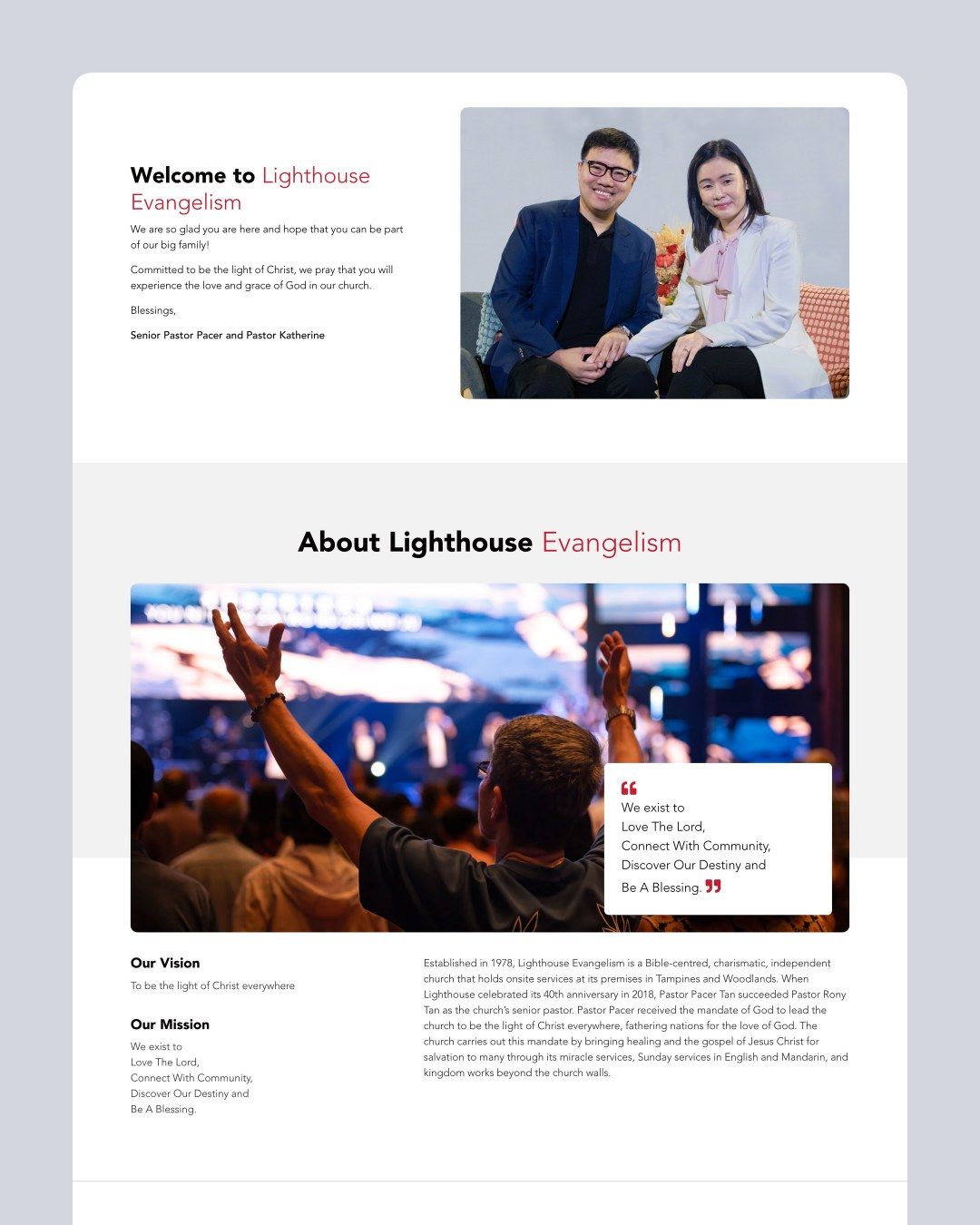
The old website carried all of that and showed none of it well. The homepage was crowded. Navigation ran deep and pages rarely linked to each other, so a visitor who landed on a sermon had no easy route to the service it came from. The Chinese side of the site was thin and out of date, and switching between languages dropped people back at the homepage.
Content layouts were breaking too. On the weekly devotionals, text sat over images and columns fell out of line. The corporate communications team wanted to post events, sign-ups and announcements themselves, in both languages, and the site made each one a chore.
How we tackled it
Sitemap first, with the church holding the pen
The project started in January 2024 with a discovery questionnaire and a kickoff call with the church's communications team. They arrived with a hand-drawn sitemap and strong views on structure. Most sections were single long pages with anchor links from the menu; only ministries, careers, events, media and testimonies needed their own level-two pages. We built the sitemap and user flows in Flowmapp to match, marked the anchor items, and moved to wireframes once they'd signed it off.
A quieter design for an older congregation
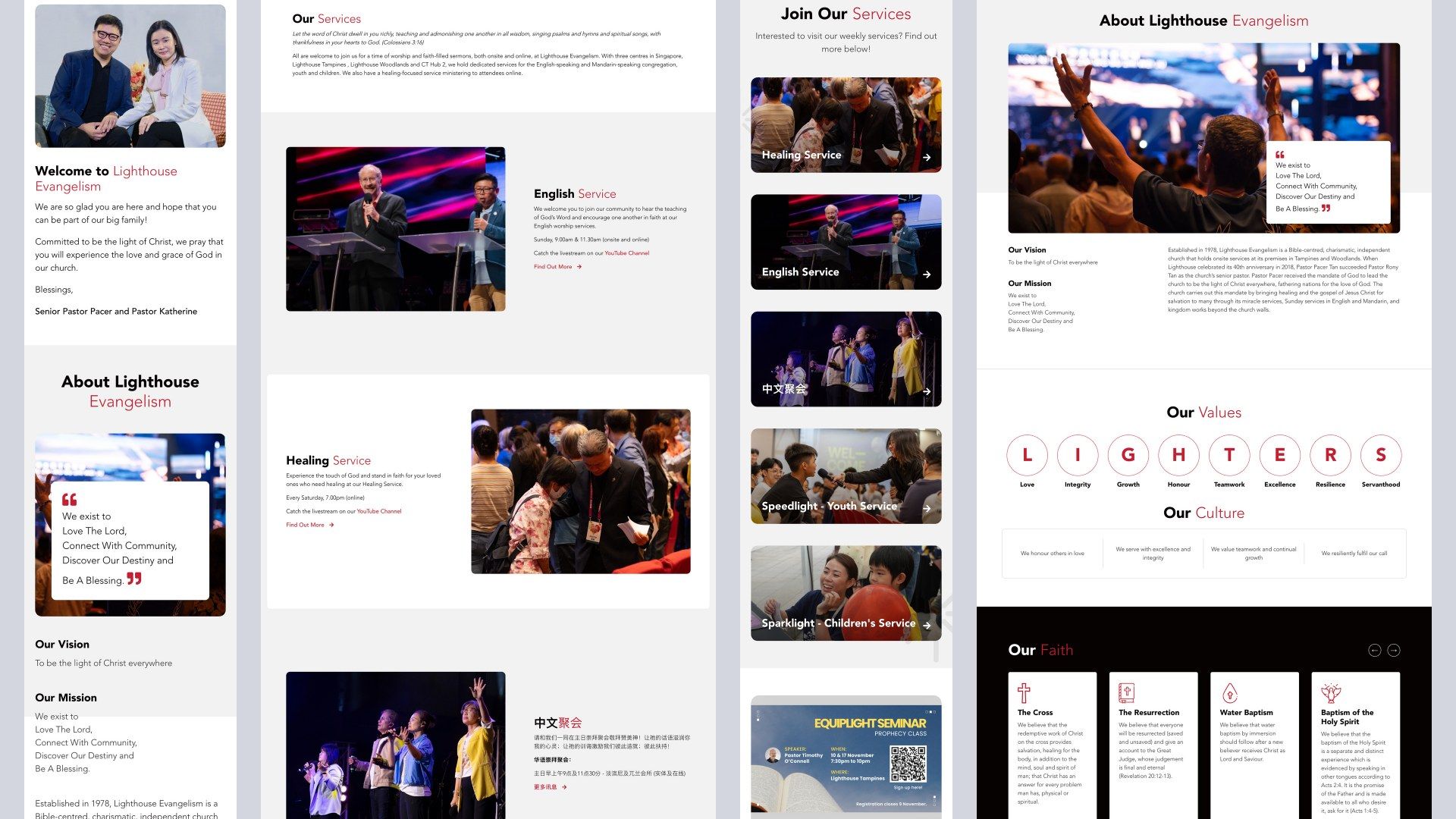
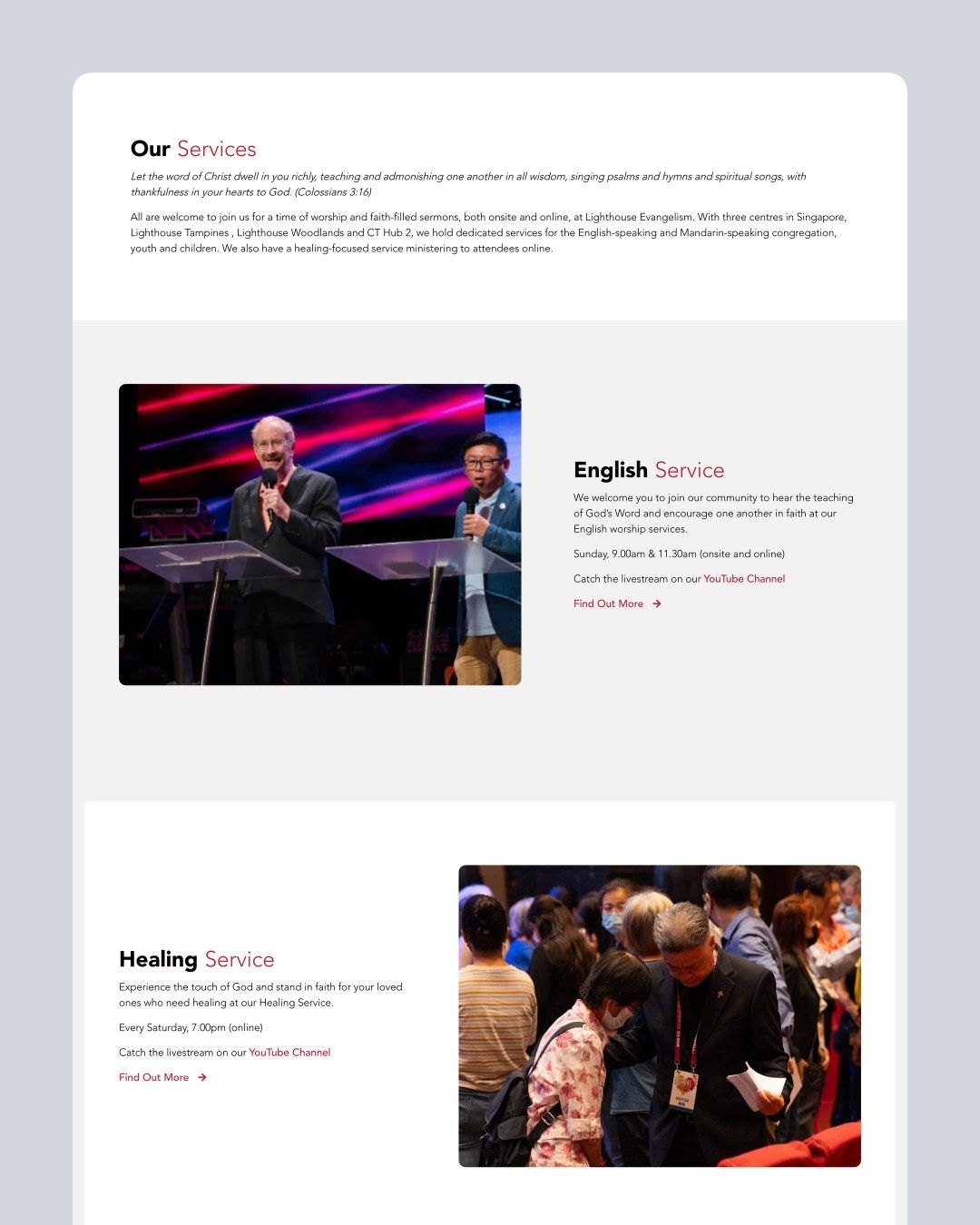
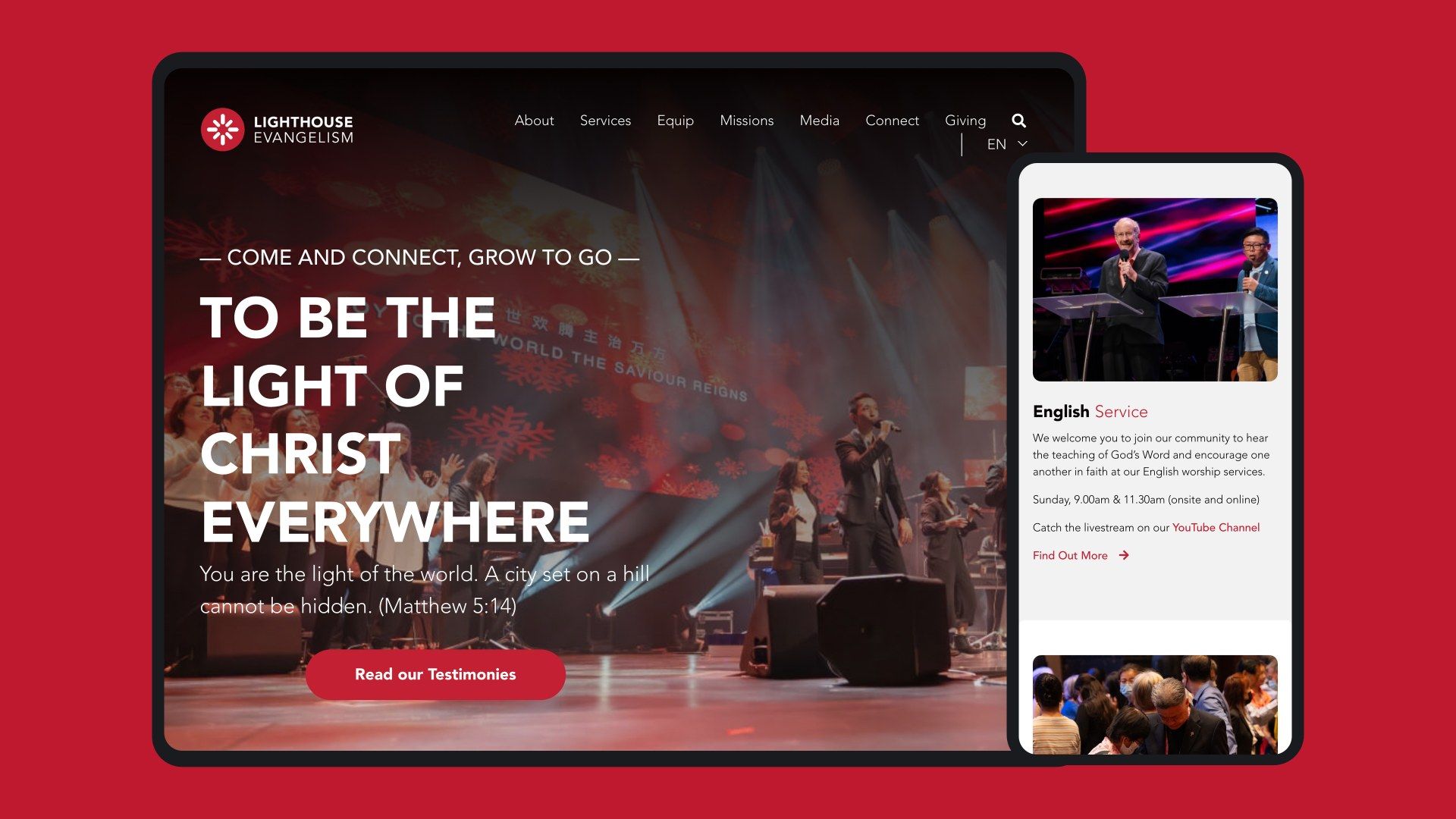
The church pointed us to Equippers Church in New Zealand as the look it wanted: big imagery, little clutter, clear calls to action. We designed three key templates in full and wireframed the rest, with larger type and generous spacing for an older congregation. Every page ends with a next step: a class sign-up, a service time or a giving link. We built the site in WordPress on Beaver Builder, with custom post types for team, ministries, events, media, updates and testimonies.
Two languages, one site
WPML runs the bilingual side. Each English page has a Chinese twin and the toggle keeps the visitor on the page they were reading. We set up the events calendar with recurring services, and after launch we refined it so a one-off event cancels the recurring slot it clashes with. Site-wide search came in July 2024 on Algolia. Google Tag Manager and Analytics went in so the church could see where visitors came from. We also delivered an SEO keyword plan built on branded terms, local search and a content calendar for Holy Week and other dates.
What we delivered
Lighthouse Evangelism now has a single website that behaves the same in English and Simplified Chinese, with a working events calendar, a searchable sermon and media library and a giving section the church manages itself. The site went live at the end of May 2024. We ran the care plan for the following year, added ministry roles pages in early 2025, and handed over a Website Owner's Manual with all plugin licences transferred in July 2025. The site is still running on that build today.
What we learned
A bilingual site is two sites' worth of content management. The toggle is the easy part. What made this one work was agreeing early that every post type, every event and every menu item would exist in both languages, then building the admin so a non-technical team could keep that promise.
The other lesson was the sitemap. The church knew what it wanted and drew it by hand. Our job was to translate it faithfully, not improve on it, and the two rounds spent on the anchor links saved weeks later.