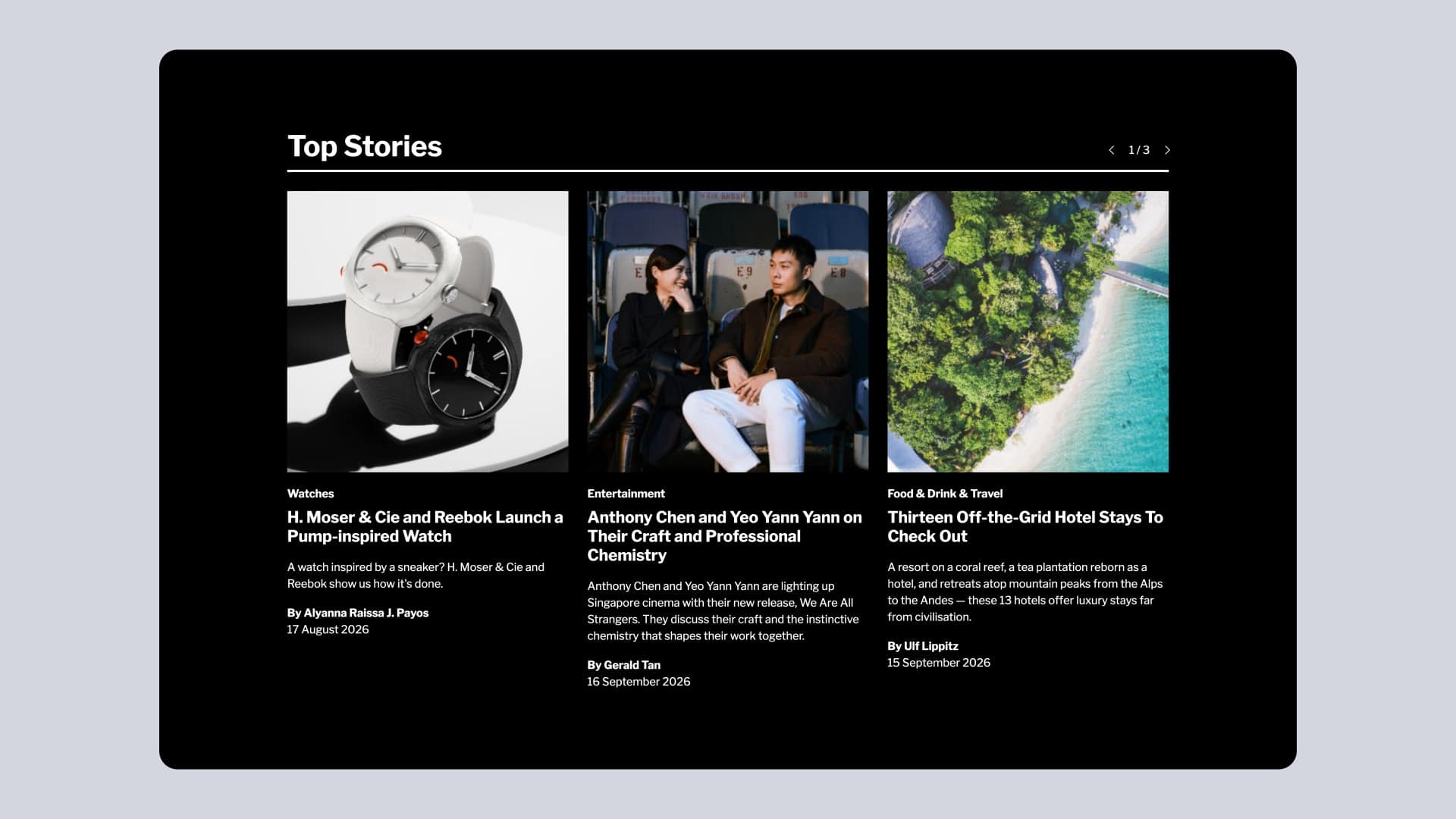


GQ Singapore
Paradigm Media needed a platform sturdy enough to launch GQ in Singapore: daily publishing for a lean editorial team, plus a custom advertising system with category targeting and impression tracking, built to Condé Nast's standards.
A custom WordPress editorial platform with its own advertising engine, built to carry 5-7 articles a day and 100% share-of-voice campaigns from day one.
What we were solving
Paradigm Media (Atlas Press Pte Ltd) holds the licence to publish GQ in Singapore under Condé Nast. Managing Editor Caroline Suganda put it plainly: readers find their news on social media and the website has taken a back seat. The job was to make the site a destination, in a market crowded with Esquire Singapore, August Man and Men's Folio.
Condé Nast HQ had to approve the site and license the web fonts (GQ Sans, Garamond Premier Pro), and branding was still in flux. Revenue comes from brand partnerships, so the site needed category-specific ad placements (fashion houses in fashion, watchmakers in watches) with impression and click tracking, plus 100% share-of-voice campaigns for premium clients. The team had been burned by unreliable developers before.
Success meant 5-7 articles a day without technical barriers, fast mobile pages for an audience that is 80% men in their 20s to early 40s, and a premium environment brands would pay to appear in.
How we tackled it
A custom advertising system instead of an off-the-shelf ad server
We had built this kind of system before, across sixteen years of editorial builds for BK Magazine, Coconuts, 99.co and Expat Living, so we knew a generic ad plugin would not handle the commercial requirements. We built the ad management system into WordPress itself: header banner and sidebar placements, category-specific targeting, concurrent campaigns, and a reporting dashboard showing impressions and clicks per placement. Premium clients can buy 100% share-of-voice in a category, and a Google Ads fallback was scoped for unsold inventory. Keeping it in WordPress means the editorial team traffics campaigns in the same admin they publish from.
An editorial theme the team could run without us
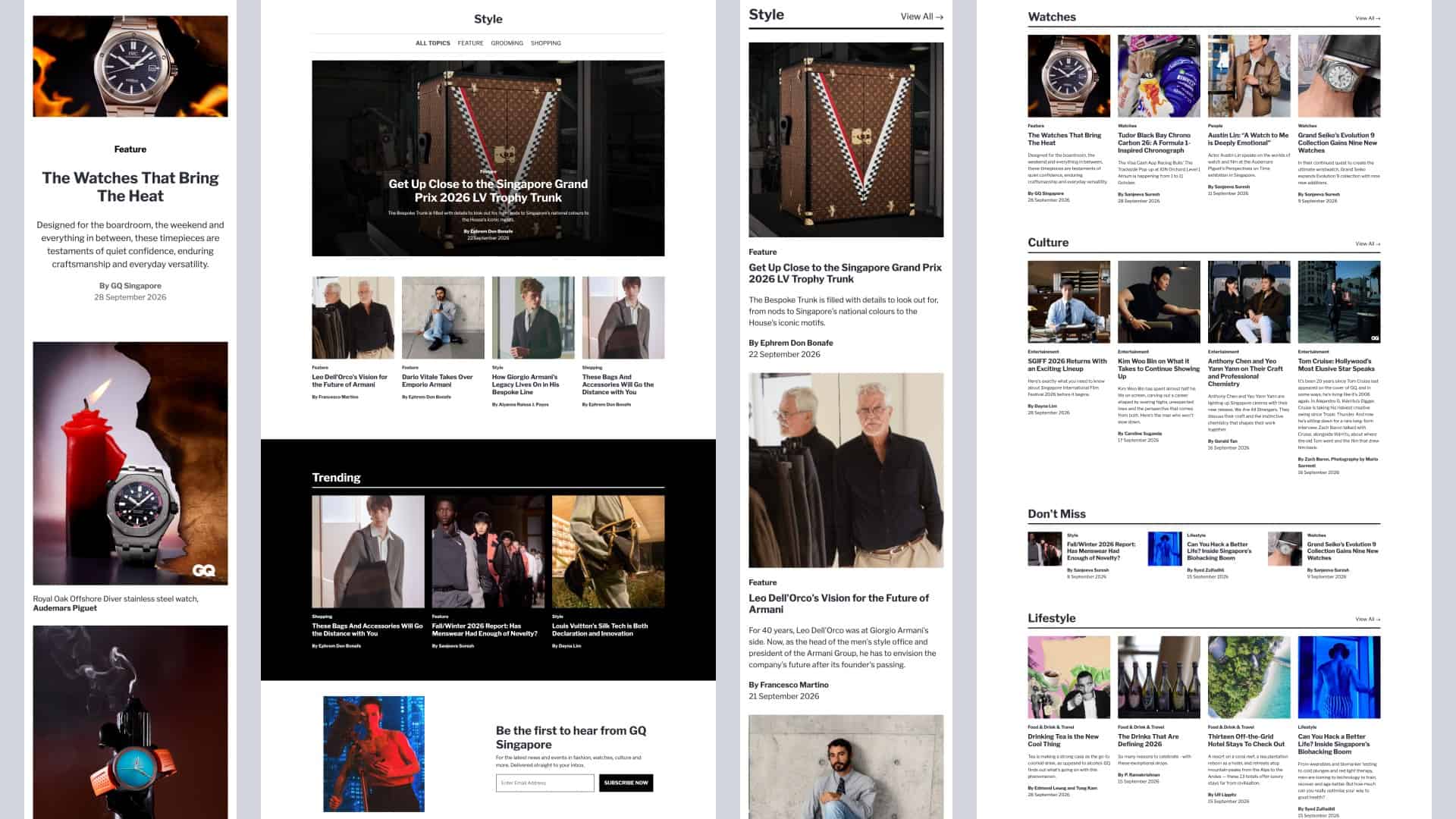
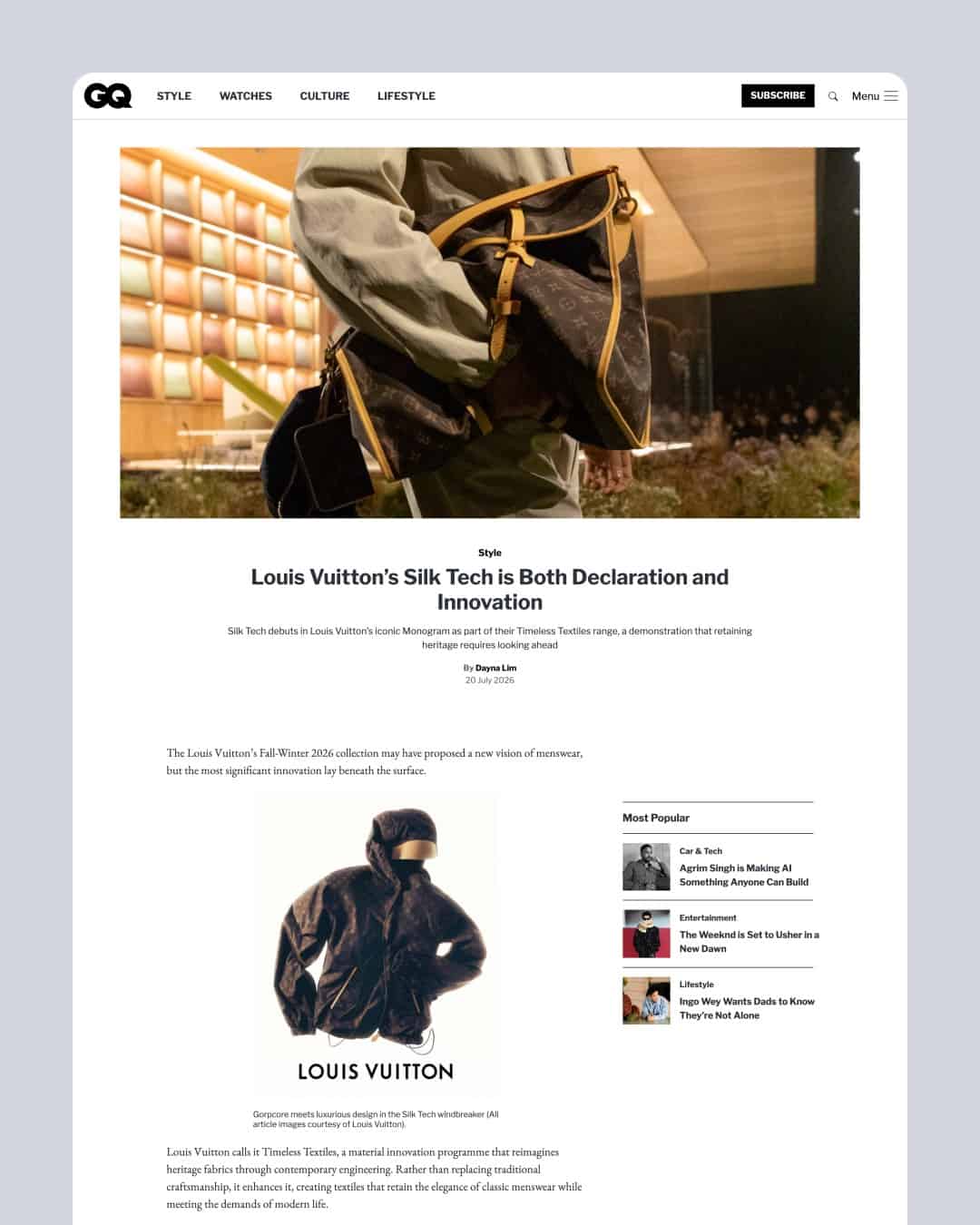
The theme is built on Gutenberg, matching the team's existing WordPress experience rather than forcing them onto a page builder. Three article templates cover the editorial range: standard articles, cover stories with a larger hero, and shopping listicles with product blocks and links. Custom blocks handle pull quotes, galleries and video embeds. Author profiles support proxy posting, so an editor can publish on a writer's behalf, and password-protected preview links let Caroline route pages to Condé Nast HQ for approval before anything goes public.
Wireframes first, brand later
Branding was still being confirmed with HQ, so we started from wireframes and planned to swap in final brand elements later. Approvals ran in parallel instead of stalling the build. Design direction drew on Tatler Asia, the reference Caroline's advertising clients admired, and GQ Hong Kong's simpler site architecture. Hosting runs on AWS in the Singapore region, with a staging environment, daily backups and two-factor authentication.
What we delivered
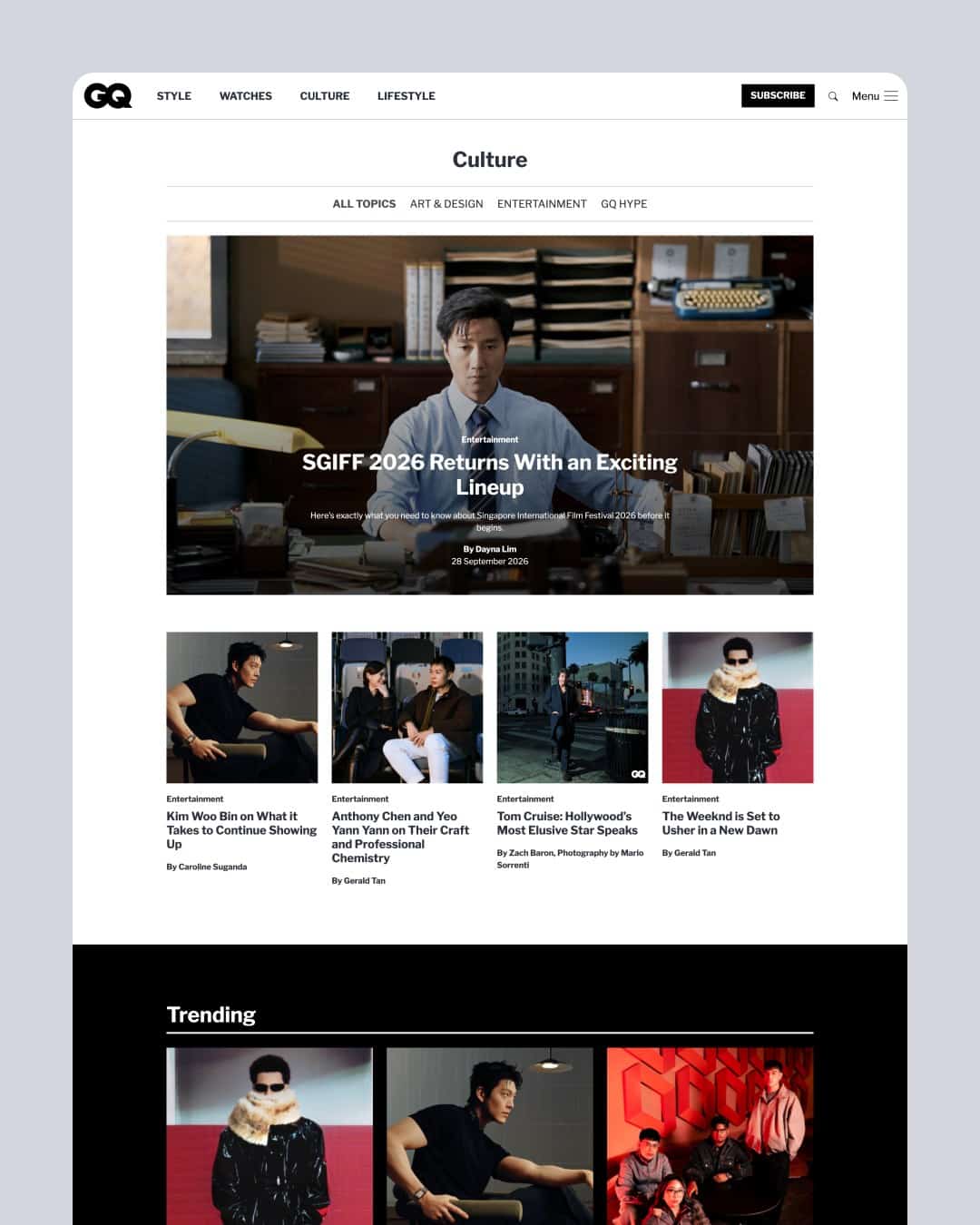
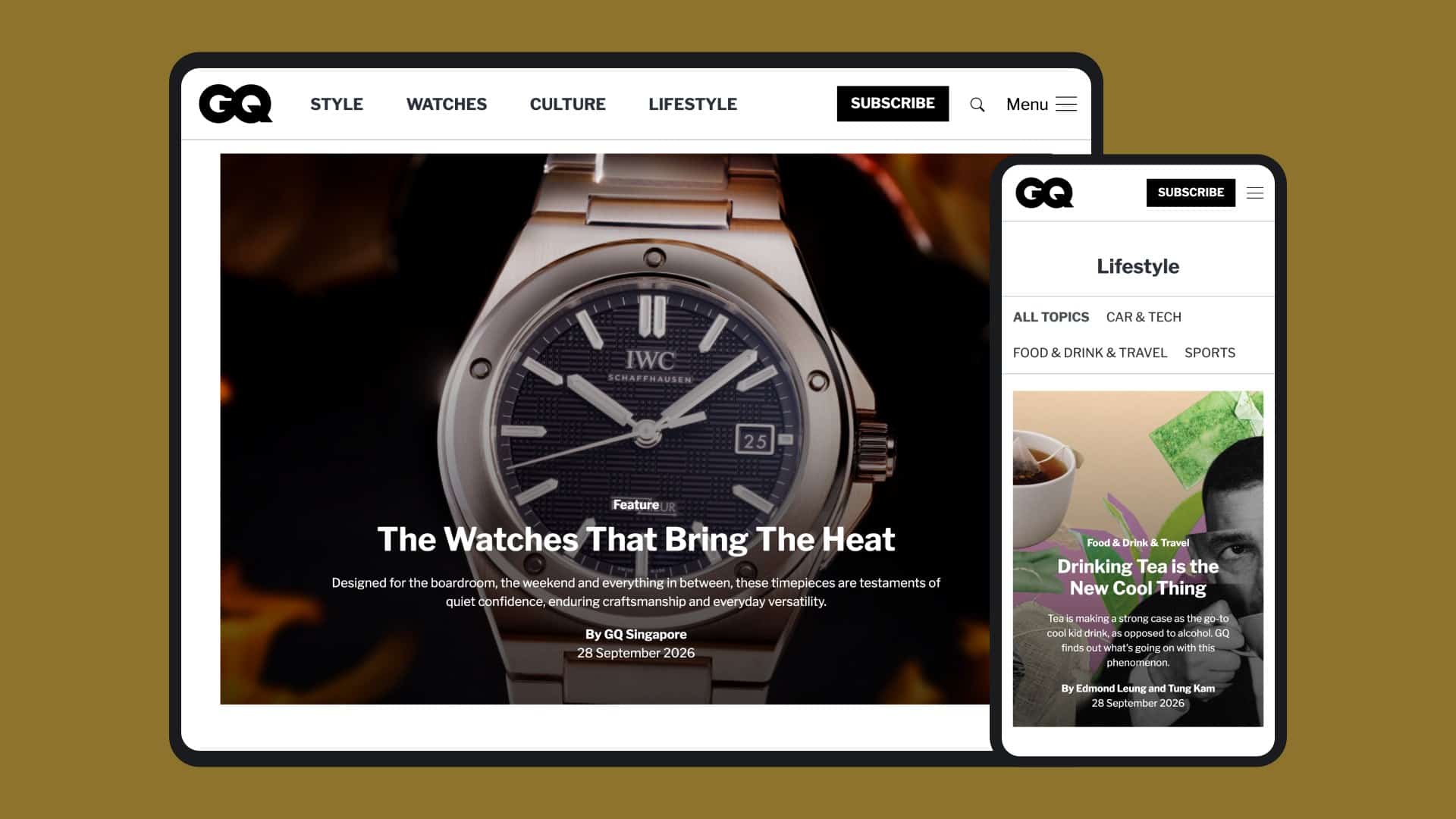
GQ Singapore now publishes daily at gqsingapore.com across Style, Watches, Culture and Lifestyle. Paradigm Media owns its advertising product outright, with tracking and reporting it can put in front of luxury brands, inside an editorial system a small team runs every day without developer help. Campaigns are trafficked from the same admin the editors publish from, and new pages route to Condé Nast HQ for sign-off through password-protected previews before they go public.
What we learned
Licensed international brands add an approval layer that changes how you sequence a project. With Condé Nast HQ holding sign-off on branding and fonts, waiting for final assets would have parked the build. Wireframes first, with brand elements swappable, kept the project moving while approvals ran.
For an ad-funded publisher, the advertising system is not a feature bolted onto the website. It is the product. Building targeting, share-of-voice and reporting into WordPress, rather than a third-party ad server, means the publisher owns the inventory, the data and the client relationship.