

EDMI
EDMI ships smart meters to utilities in over 100 countries, but its website couldn't carry that story. We designed and built a new global WordPress platform, then grew its search visibility (monthly impressions up 64% within three months of the follow-on sprint).
A new WordPress platform built around the way utility buyers evaluate vendors, followed by an optimisation sprint that lifted monthly search impressions 64% from their pre-sprint low.
What we were solving
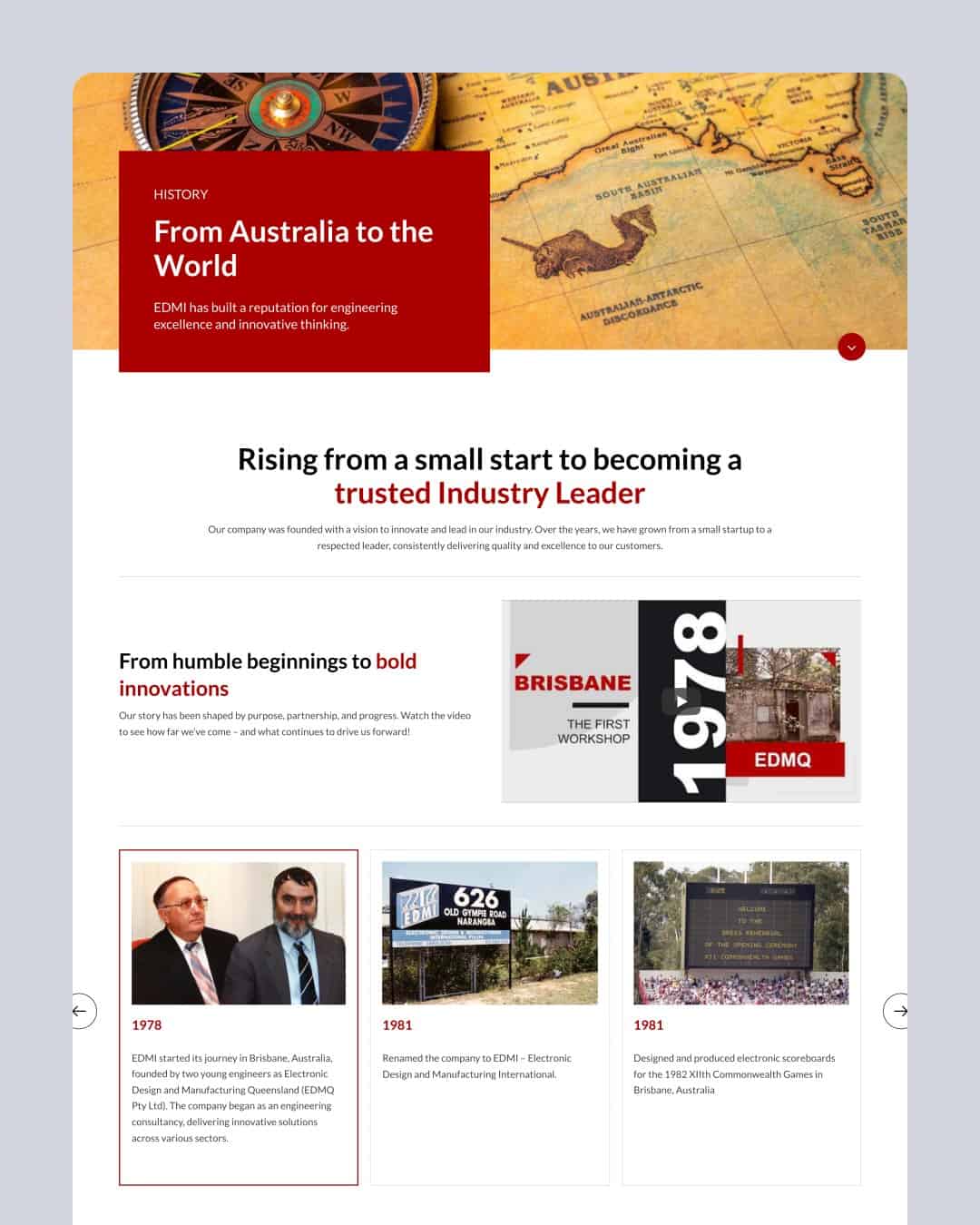
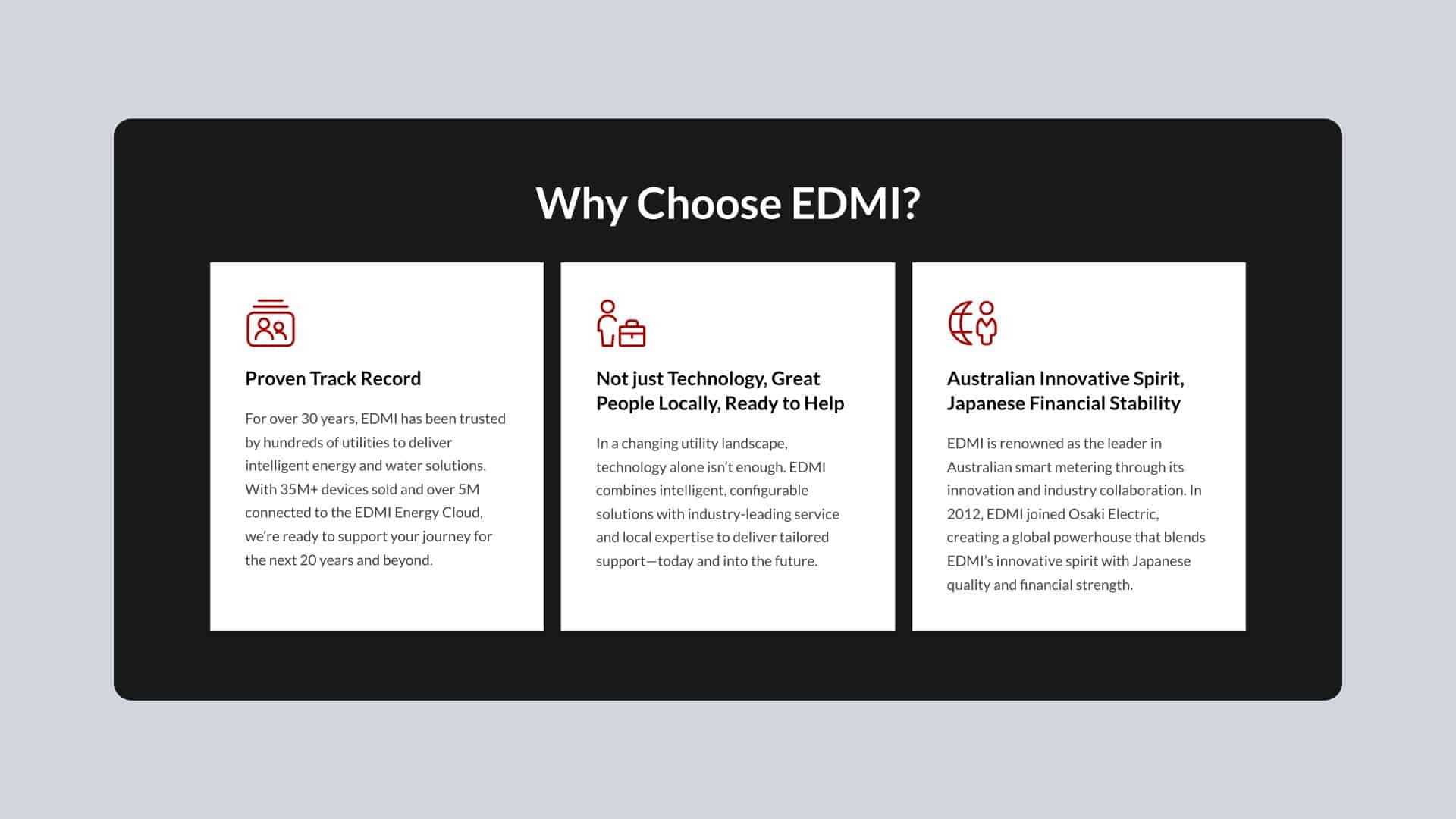
EDMI manufactures smart electricity, gas and water meters for utilities, with 40M+ devices delivered across 100+ countries and offices in Singapore, Australia, the UK, the USA and beyond. It is the global brand of the Osaki Electric group, listed on the Tokyo Stock Exchange, and it sells to utility procurement teams, not consumers.
The old website undersold that position. EDMI wanted to be seen as a complete energy solutions provider, not just a meter supplier. It needed modern design, better navigation, faster pages and a clear path to enquiry. The product catalogue varies by region (a meter certified for Australia is not the one a US utility buys). The marketing team wanted a CMS it could run itself.
In early 2025 EDMI engaged us to design and build that site. Once it was live, a second problem came into focus. The site ranked well for the brand but was invisible on the commercial terms utility buyers search.
How we tackled it
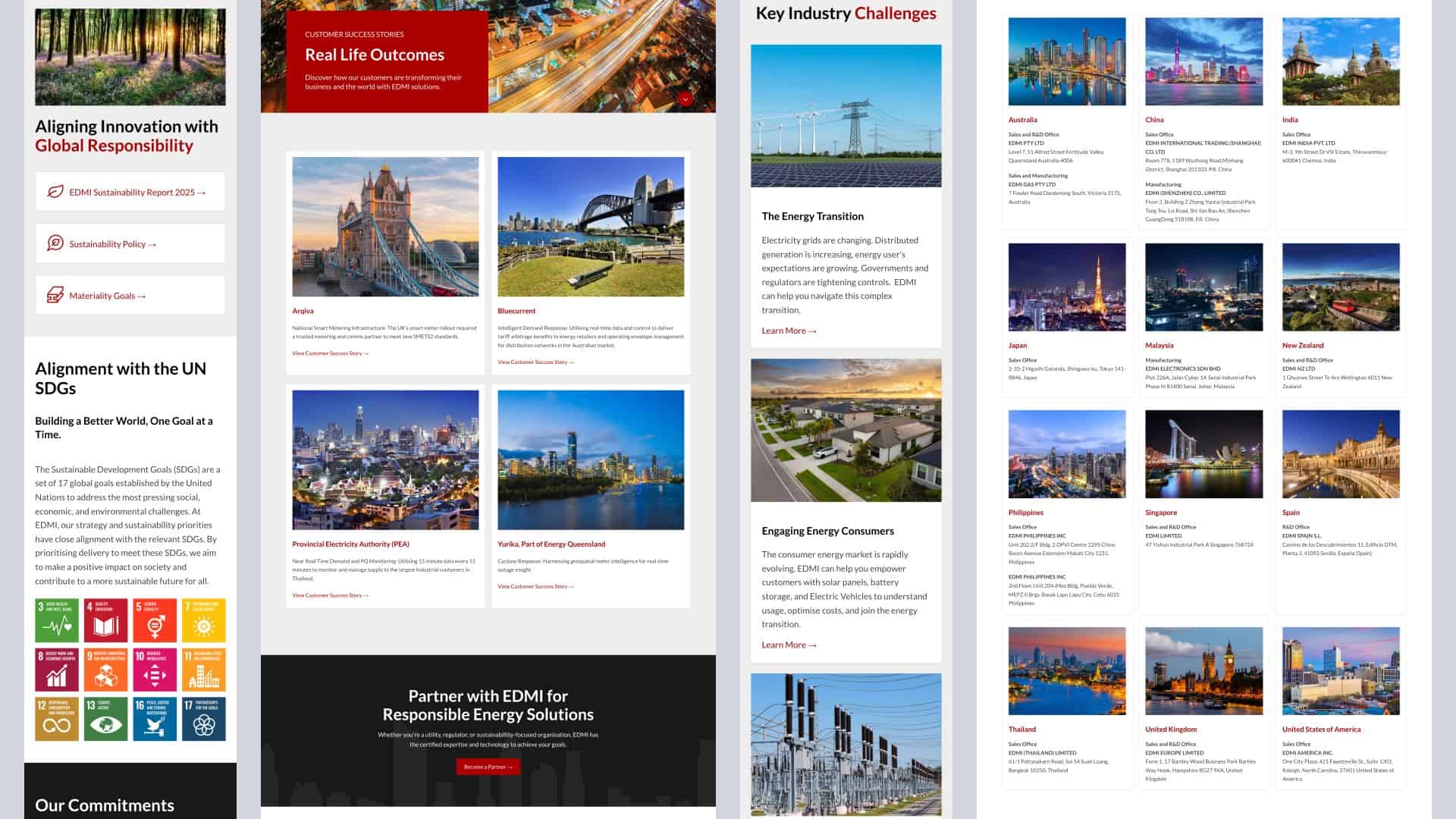
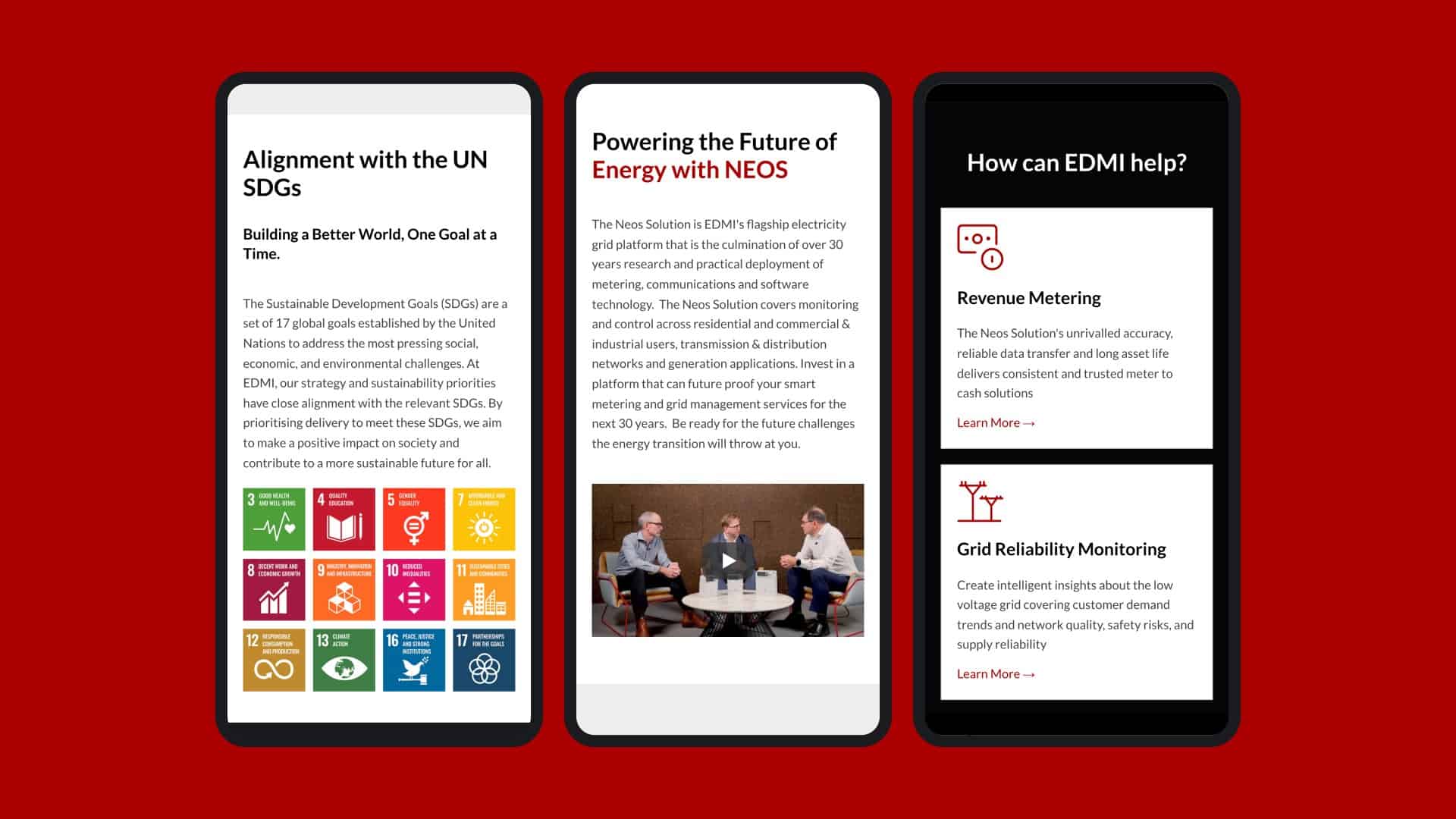
Solution-led, not product-led
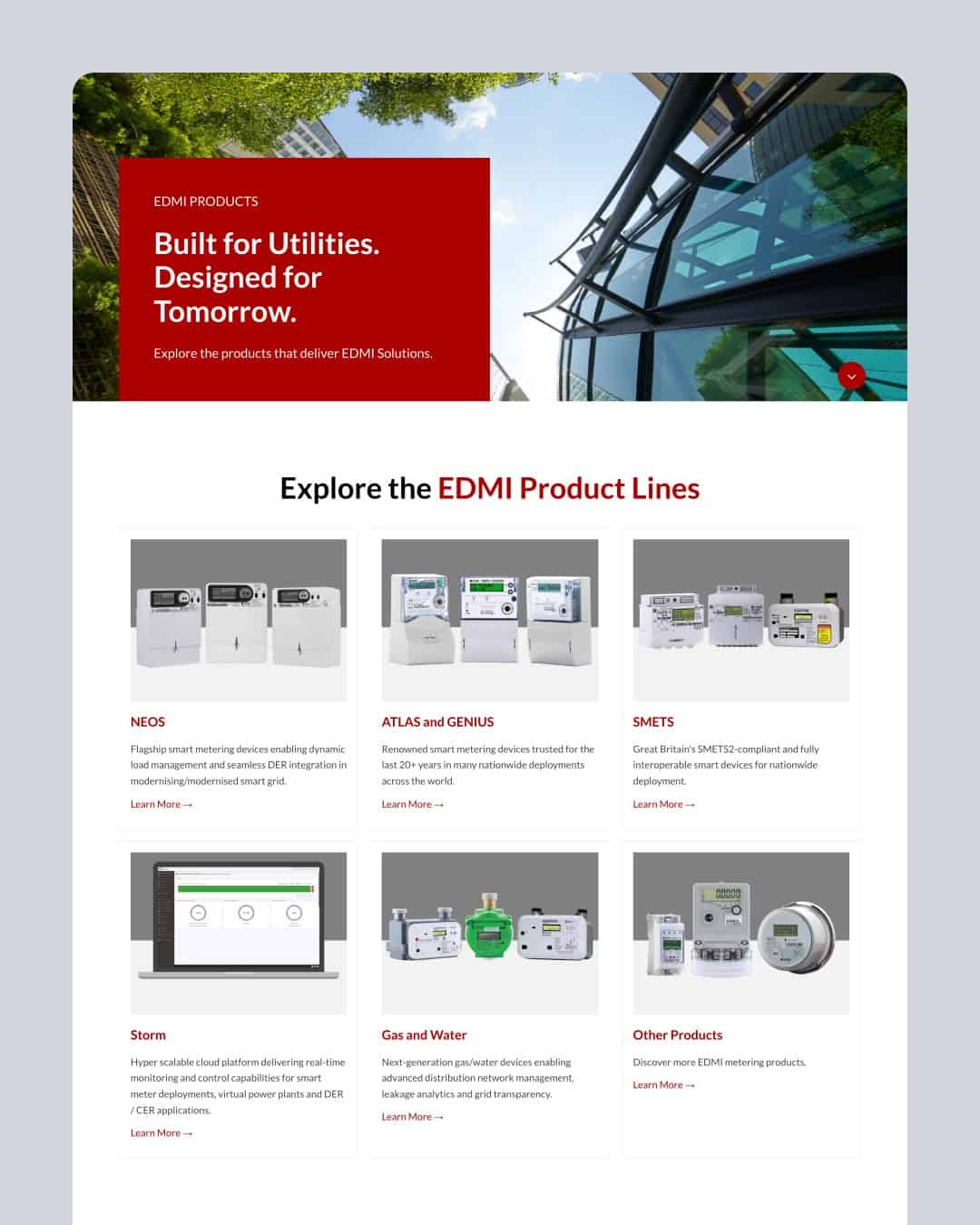
We reviewed the competitive field (Iskraemeco, Landis+Gyr, Itron, Kamstrup and others) and sharpened EDMI's differentiators: "Smart from the Start", never having built dumb meters, with its own factories and R&D. The site guides visitors by their challenges rather than by product codes, with contact as the primary call to action. We built it on WordPress with custom templates and ten post types, so the marketing team updates every section without a developer. Products filter by region under each solution, enquiry forms feed Salesforce, and site search runs on Algolia.
An audit once the site was live
EDMI then asked us to grow its search visibility in expansion markets, particularly the USA. An October 2025 audit showed strong branded rankings hiding legacy problems. 92.7% of clicks came from people who already knew EDMI. Google was still crawling 1,677 dead URLs left over from the old site, 2,018 pages sat unindexed against 235 indexed, and GA4 had no conversion events at all. We sequenced the fixes by impact.
Fix the foundations, then pick winnable terms
November was implementation: title tags rewritten across priority pages, 94 meta descriptions rewritten to stop truncation, 11 redirect chains resolved, 35 orphan pages linked into the site, and GA4 conversion goals taking tracked events from zero to five or more. December shifted to growth. Rather than chase consumer keywords owned by retail energy giants, we built a B2B keyword strategy around the procurement terms utility buyers search, backed by an eight-piece content package (14,800+ words) and a Google Business Profile playbook for EDMI's global offices.
What we delivered
EDMI now has a site that presents it as a solutions company rather than a parts catalogue, filters products by region for buyers in 100+ countries, and hands the marketing team full control of content. The post-launch sprint added the layer a launch alone cannot: foundations Google can crawl without wasting budget on broken URLs, metadata that competes in search results, and conversion tracking that ties organic traffic to enquiries. The content package and GBP playbook give the team a ready-made growth plan for the USA push, aimed at lifting non-branded traffic from its 7.3% baseline.
What we learned
Launch is the halfway point. The new site looked healthy (Domain Rating 48, 59 keywords in the top 3), yet Google was still crawling 1,677 dead URLs and nine pages sat unindexed for every one indexed. Post-migration cleanup decides whether new content gets found. It deserves its own project, not a line on a launch checklist.
EDMI could never outrank consumer energy suppliers with ten times its authority for "smart meter". B2B procurement terms ("AMI infrastructure", "smart metering solutions", vendor comparisons) turned an unwinnable battle into an open field.
Impact & outcomes
metadata issues fixed
of critical technical issues resolved
rise in monthly search impressions, a five-month decline reversed
From the initial discovery questionnaire to the final implementation, their team took the time to truly understand our brand, goals, and audience.