

Foulger Underwood
An M&A advisory firm with offices in the UK, Singapore and Hong Kong needed one website to serve two distinct markets. We researched, wrote and built it end to end, around the precise searches practice owners actually make.
Foulger Underwood now runs a single WordPress site that presents its UK and Singapore practices to the firm owners it advises through mergers, acquisitions and sales.
What we were solving
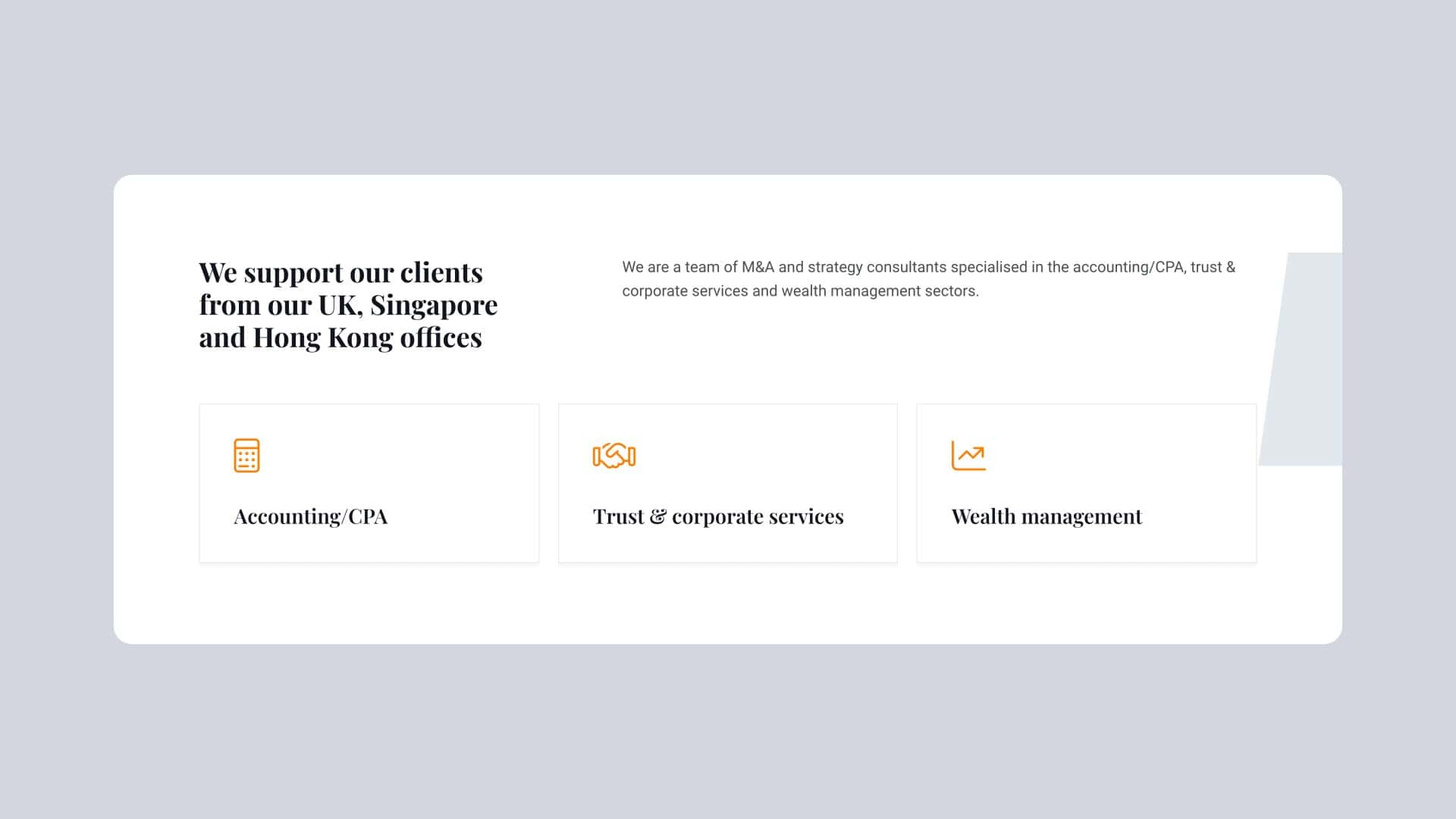
Foulger Underwood is an independent M&A advisory and strategic consultancy founded in the UK in the mid-1980s. The firm advises accounting and CPA practices, trust and corporate service providers, and wealth management businesses through mergers, acquisitions and sales, with completed transactions across 35 countries and offices in the UK, Singapore and Hong Kong.
The audience makes this a hard site to get right. A visitor is often a firm owner quietly weighing up whether to sell the practice they spent decades building. They search in precise, low-volume phrases ("accounting practice for sale", "selling an accountancy practice"), they judge credibility fast, and they will not fill in a long form. Enquiries come by email, person to person. The firm also needed one brand presented to two different markets, the UK and Singapore.
Success meant a clear user flow for each region, content the team could keep current, and copy in the language buyers and sellers of practices use.
How we tackled it
Structure before design
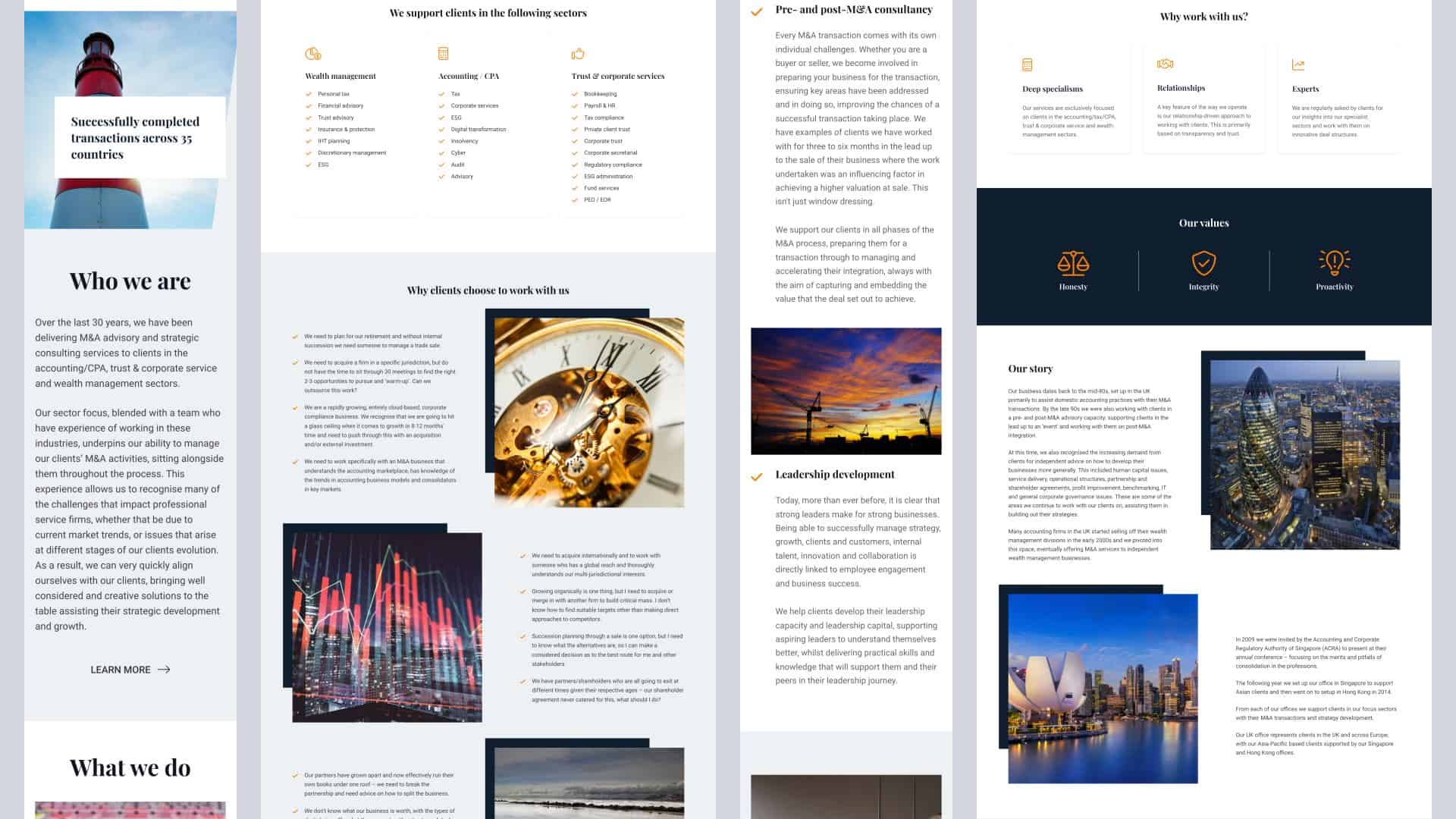
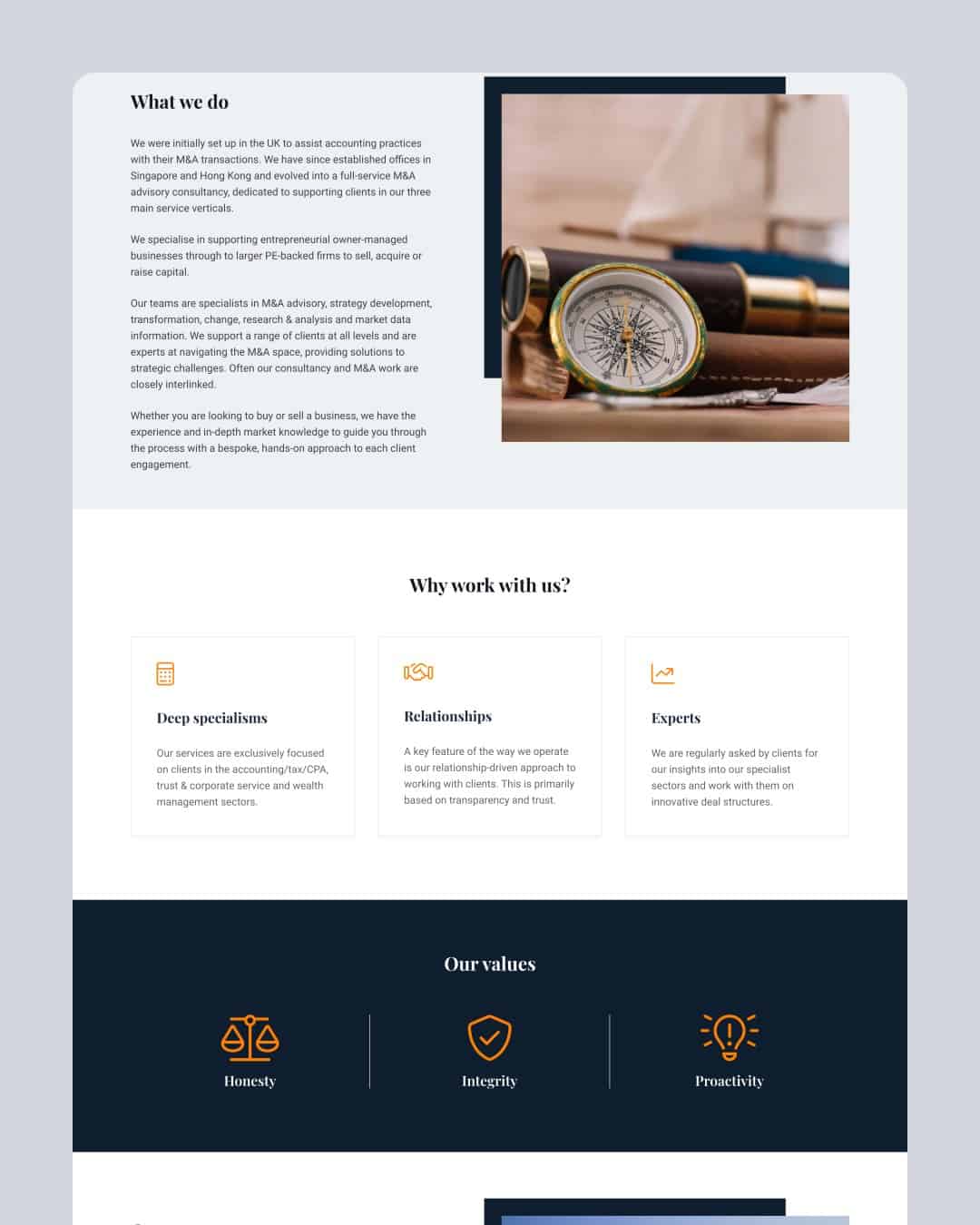
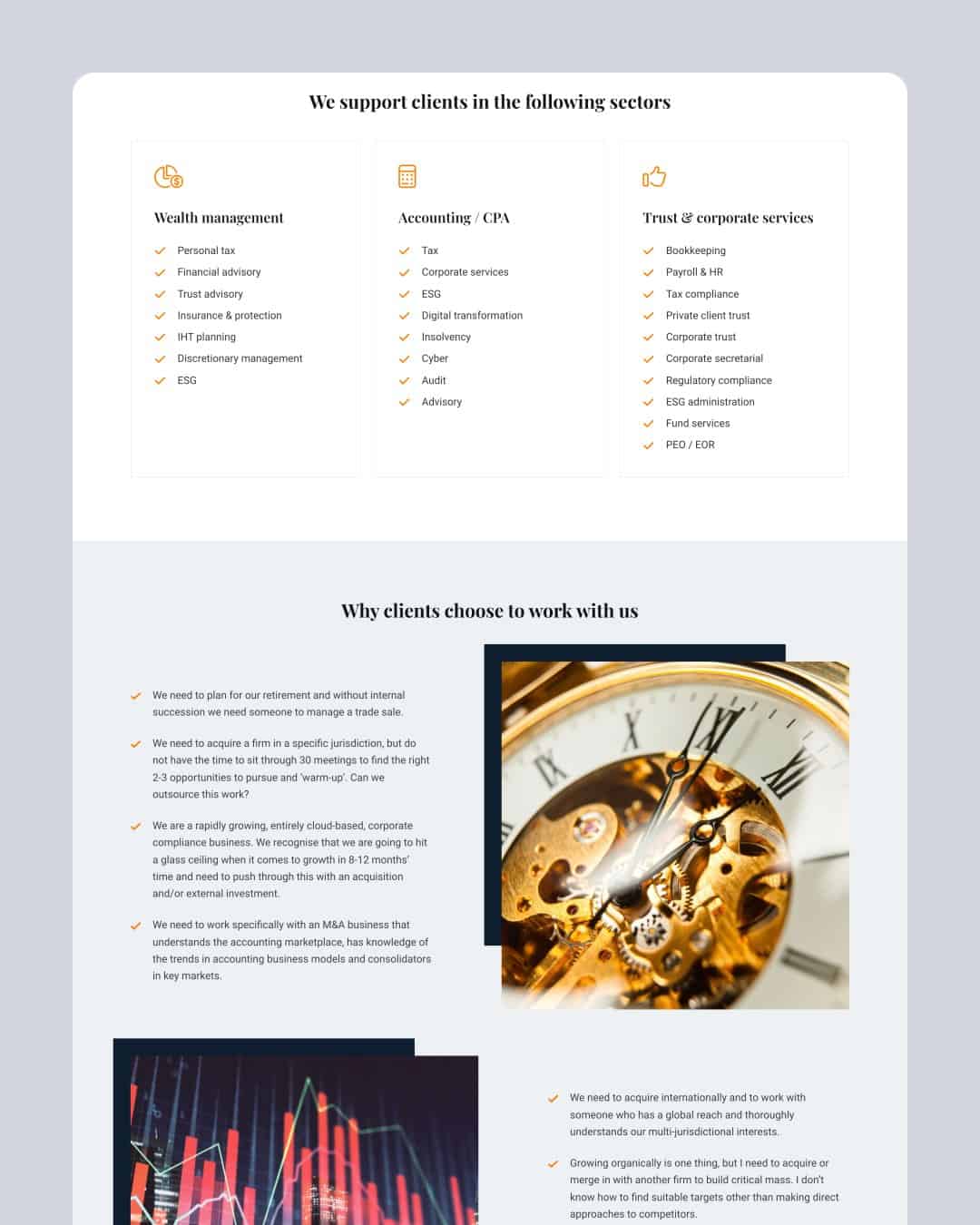
The kickoff work in September 2021 centred on information architecture rather than visuals: a user flow covering the two regions, a sitemap, and page designs for Home, About and Services. Team members, clients, resources and testimonials were set up as structured data types in WordPress rather than hand-built pages, so the firm can add an adviser profile or a client testimonial without touching a developer.
Keyword research for a genuinely niche market
We ran the keyword research before writing a word of copy. The valuable terms are small. "Accounting practice for sale" draws roughly 700 monthly searches at a difficulty of 12 out of 100; "mergers and acquisitions singapore" around 150; dozens of transactional phrases ("selling a bookkeeping firm", "how to sell a payroll business") sit at 10 searches a month with zero difficulty. In a market this specific, ranking for fifty tiny phrases beats chasing one big one. We then wrote the website copy against that research and the firm's competitor set, from the home page and services to the firm's history since the mid-1980s.
Build and launch
The site was built on WordPress with a custom child theme, staged on our test environment for client review, then migrated to Foulger Underwood's own hosting account ahead of launch. Performance tooling and Google Site Kit were configured as part of the build, and image licensing was finalised against the approved designs before go-live.
What we delivered
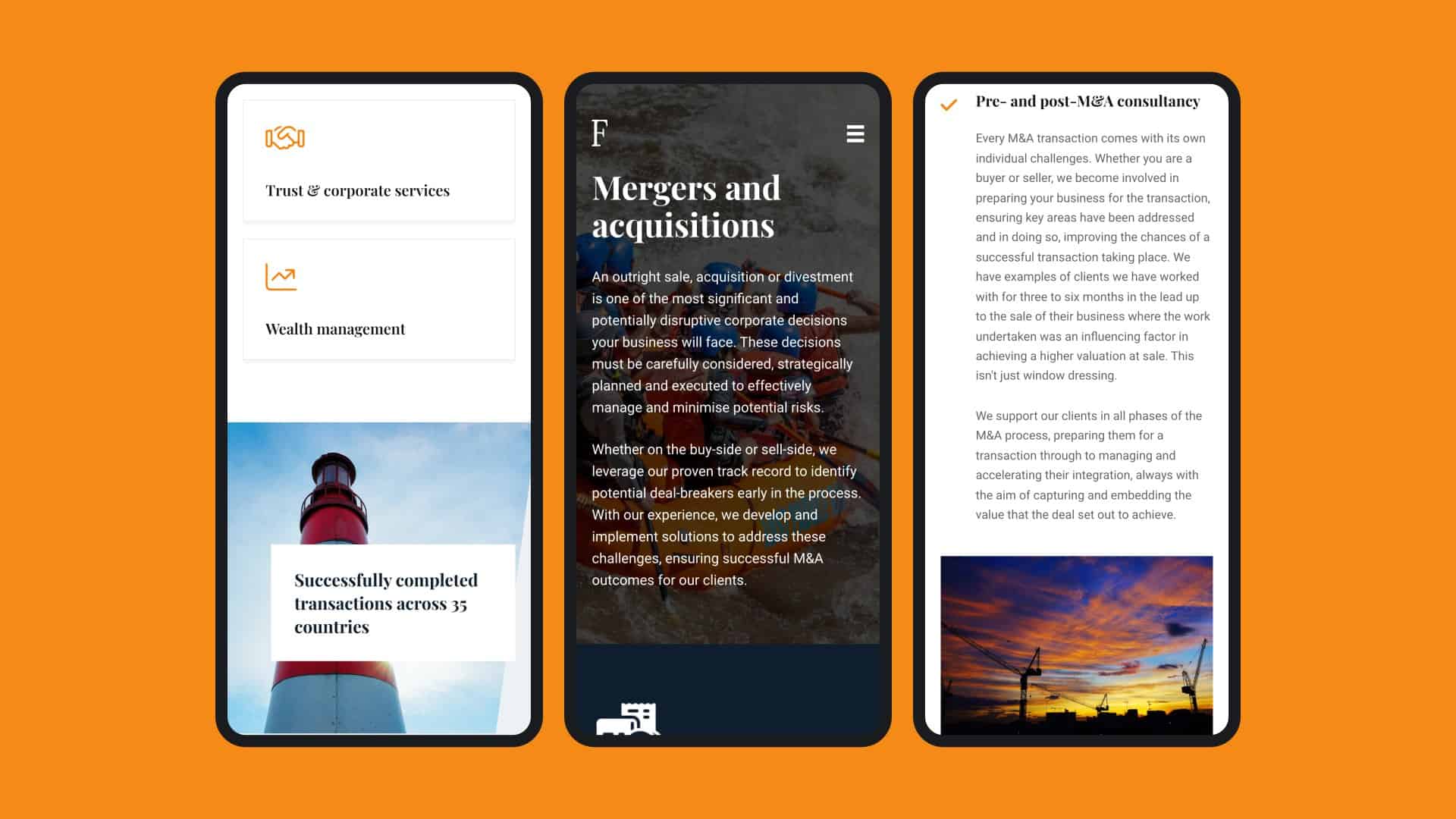
Foulger Underwood now has one site that does the job of two. UK and Singapore audiences each get a relevant path through the firm's M&A advisory and consultancy services. The credibility signals that matter in this market (named advisers, client testimonials, a live insights section) are structured content the firm's own team maintains. Testimonials and insights do much of the persuading on the live site, and both are content the team publishes to directly, without waiting on a developer.
What we learned
Niche B2B advisory is where keyword research earns its keep. Nobody builds a content strategy around a 10-search-a-month phrase on instinct. But when the searcher is a practice owner ready to sell, those ten searches are worth more than ten thousand casual ones. The research gave us confidence to write for tiny phrases.
Structure also outlasts schedules. This project ran across a long timeline, and modelling team members, clients, resources and testimonials as data types meant the build absorbed pauses and content changes without rework. Pages date; structured content adapts.