

Let’s Talk Let’s Eat
A Queensland speech pathology practice with three clinics and almost no search visibility. We rebuilt their site on WordPress with location pages, parent-first content structure and local SEO foundations.
Rebuilt a paediatric speech pathology website on WordPress with dedicated location pages for Aspley, Ormiston and Mackay, replacing a site that attracted roughly 8 organic visits a month.
What we were solving
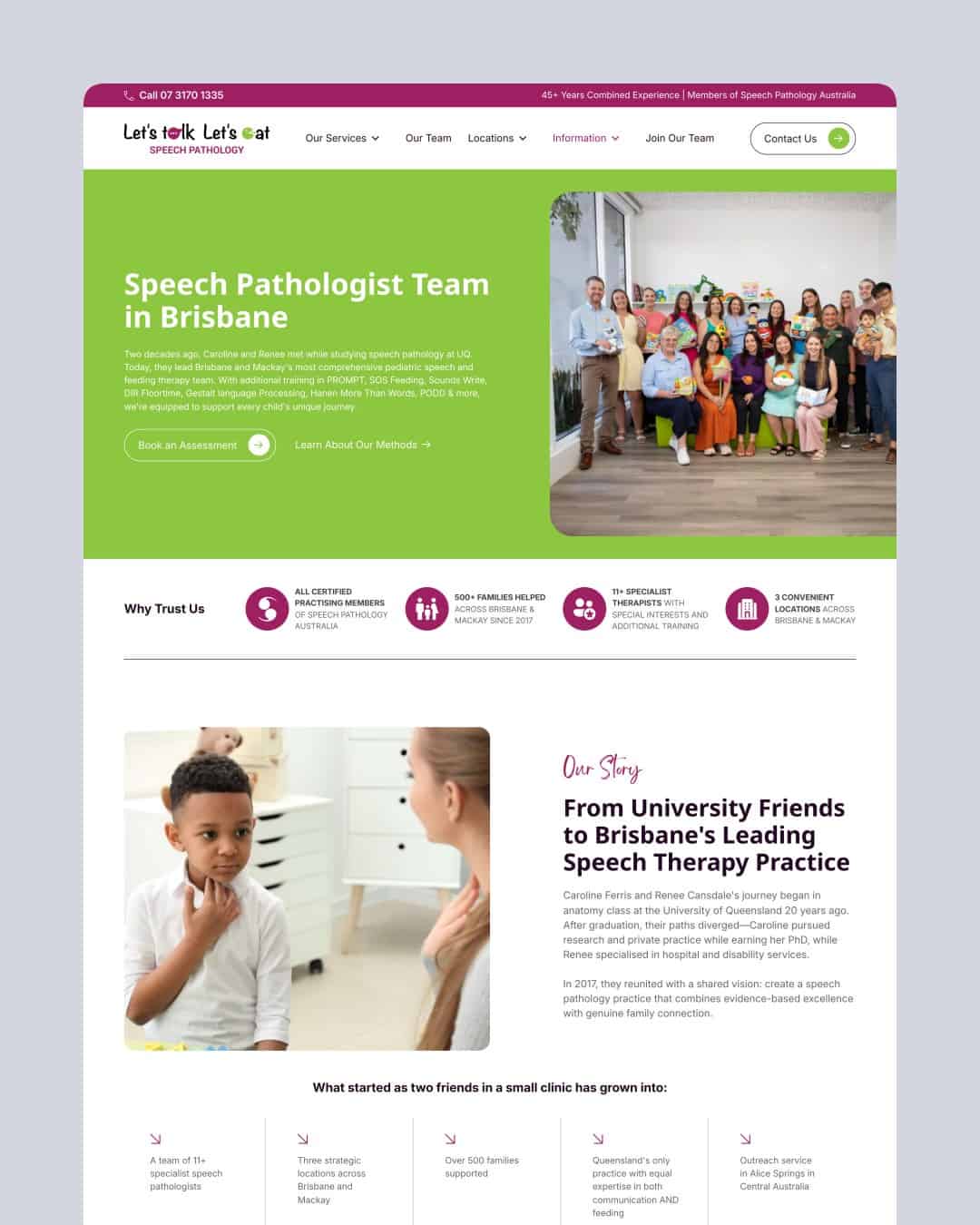
Let's Talk Let's Eat (LTLE) is a paediatric speech pathology practice founded in 2017 by Caroline Ferris and Renee Cansdale, who met at the University of Queensland. It supports children aged 1 to 18 with communication and feeding therapy from Aspley, Ormiston and Mackay, with telehealth reaching Alice Springs. The old site was slow, hard to navigate and looked home made. It drew around 8 organic visits a month, and enquiries came via social media instead.
Parents searching for help with a late talker or a fussy eater found established competitors first, even though LTLE offers speech and feeding therapy under one team, with minimal waitlists, which most clinics do not. LTLE also supports NDIS participants but is not a registered NDIS provider, so no page could imply registration, and nothing could read as ableist.
Success meant ranking locally in Brisbane and Mackay, converting anxious parents into phone calls, and recruiting for a growing team.
How we tackled it
Three clinics, one architecture
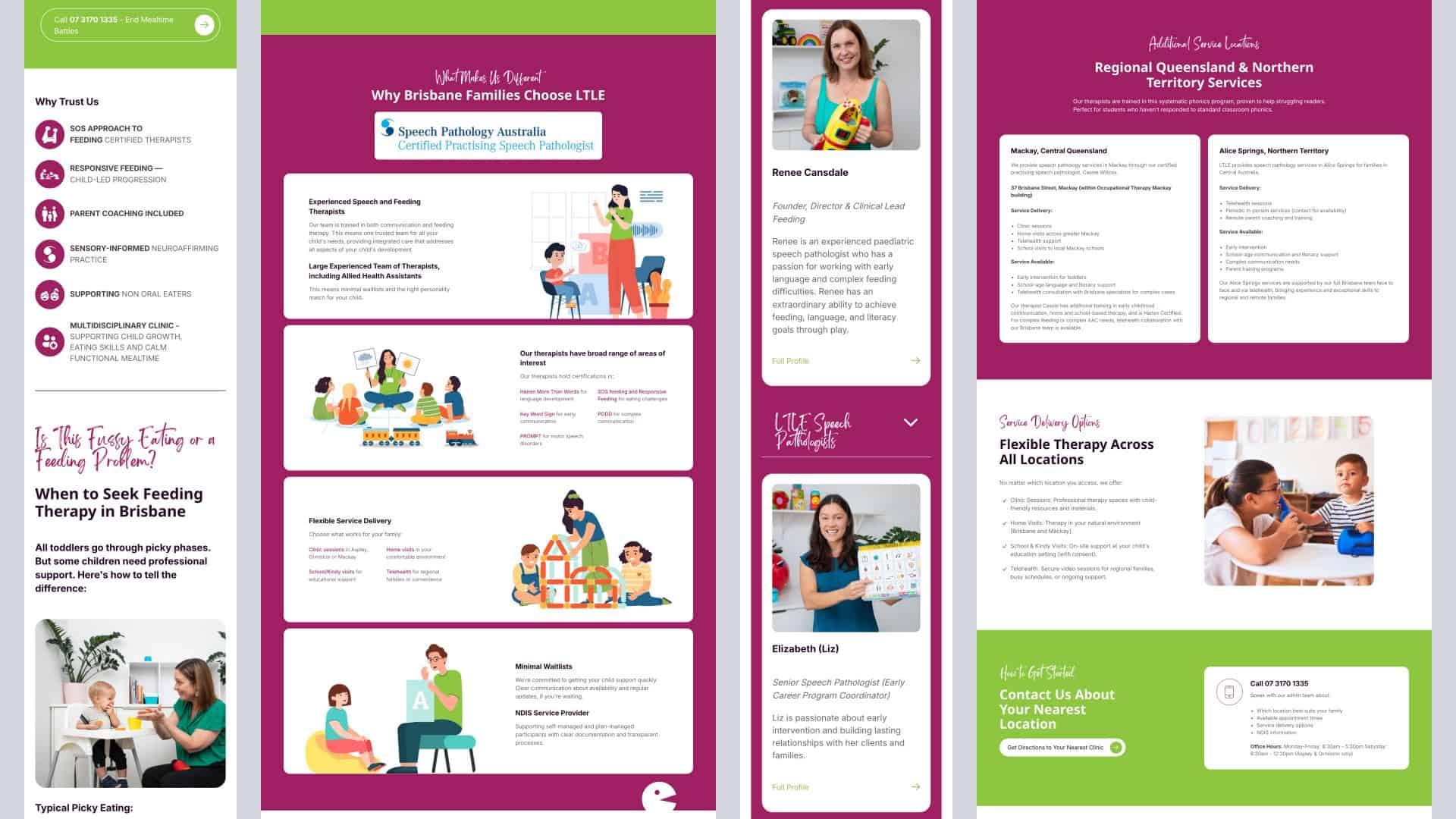
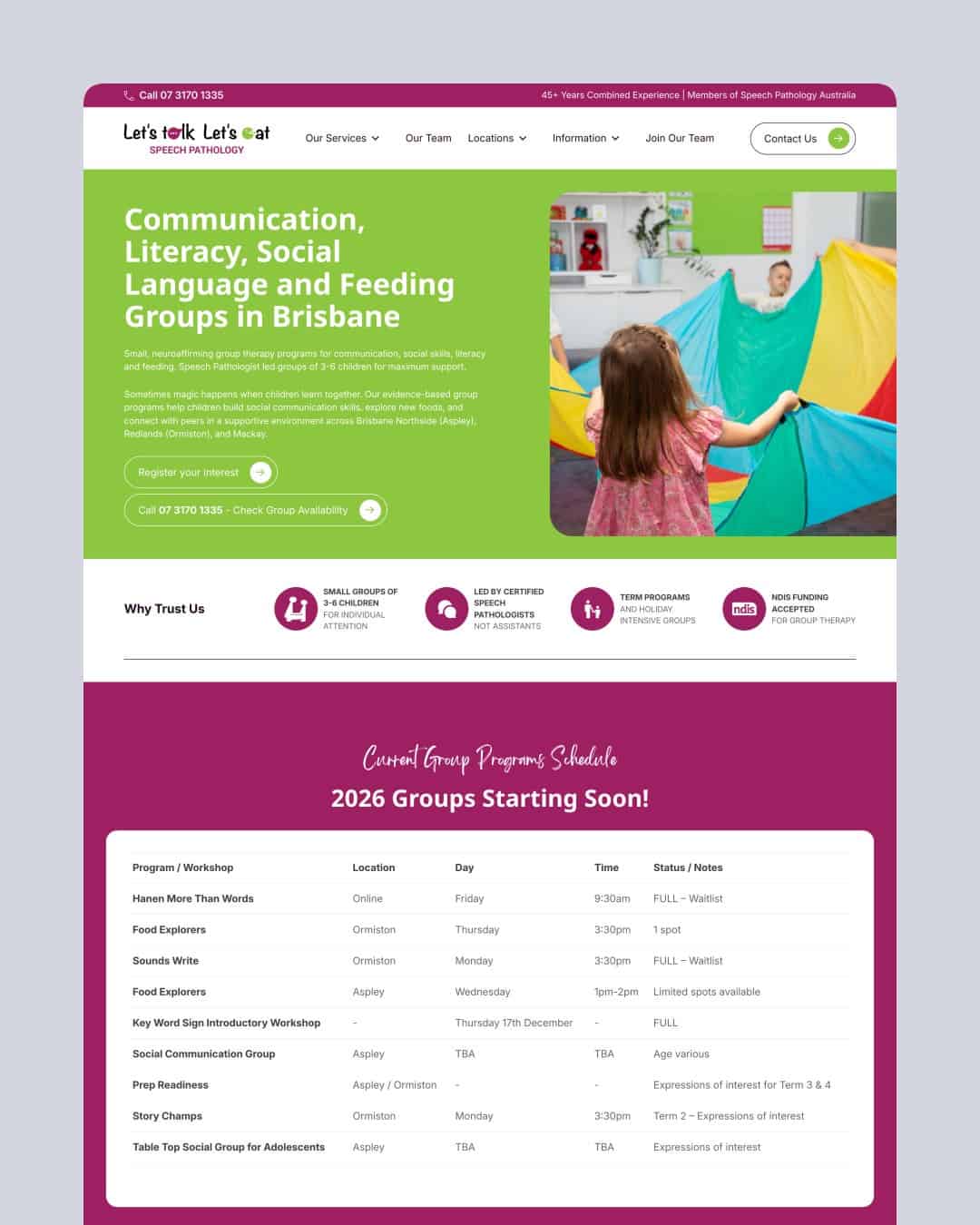
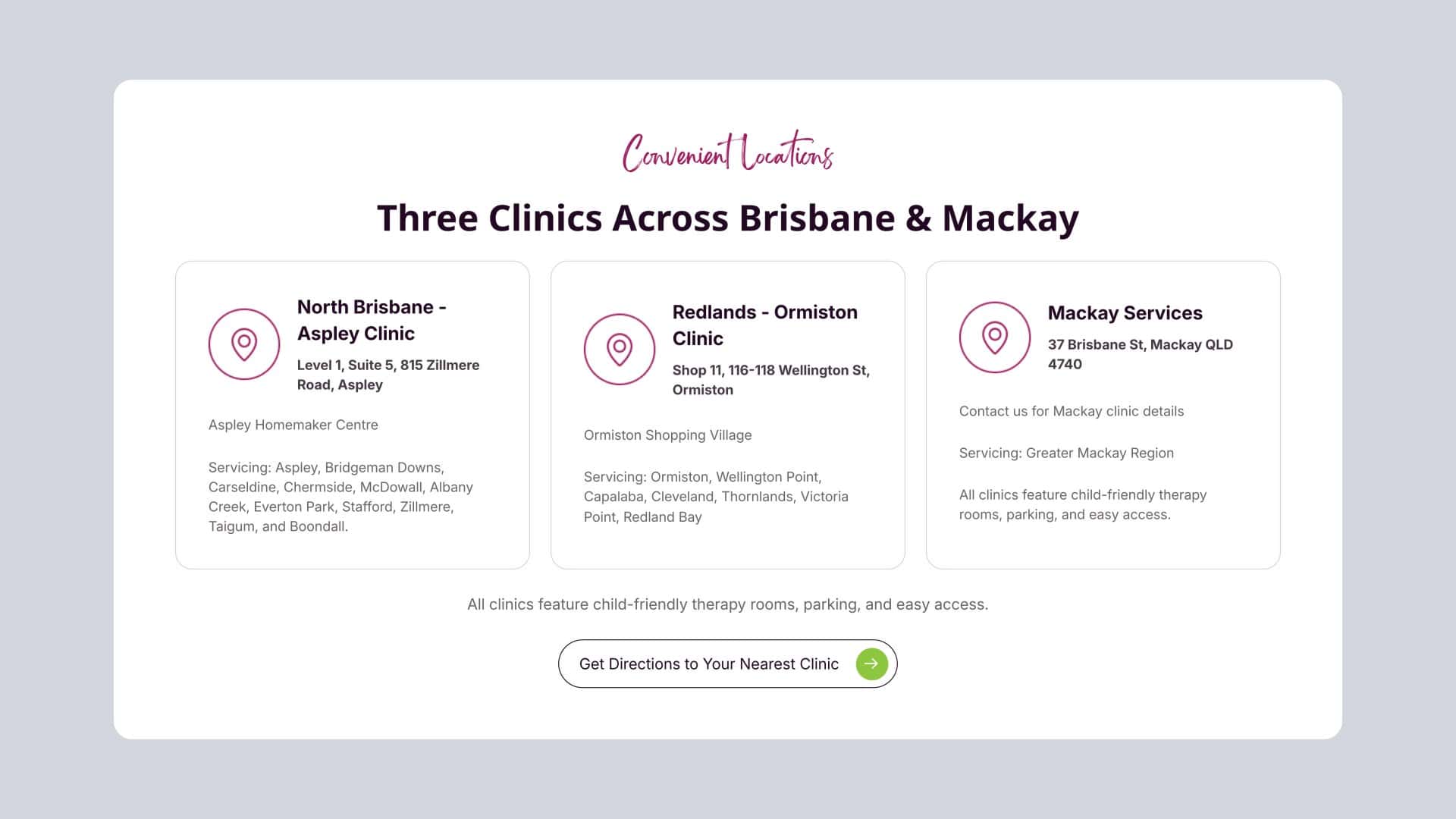
A single-location brochure site would have wasted LTLE's biggest structural advantage. We designed the information architecture around five core service pages (Early Intervention, School-Aged Language, Feeding Therapy, Group Programs, and Family & Community Training) crossed with dedicated location pages for Aspley, Ormiston and Mackay. Each service page links to relevant locations and condition guides. Each location page links back to the services offered there, with LocalBusiness schema per clinic and FAQ schema on service pages. Internal linking rules were written down before any page was built, including guardrails to stop Early Intervention and School-Aged Language competing for the same head terms.
Built for the team to run
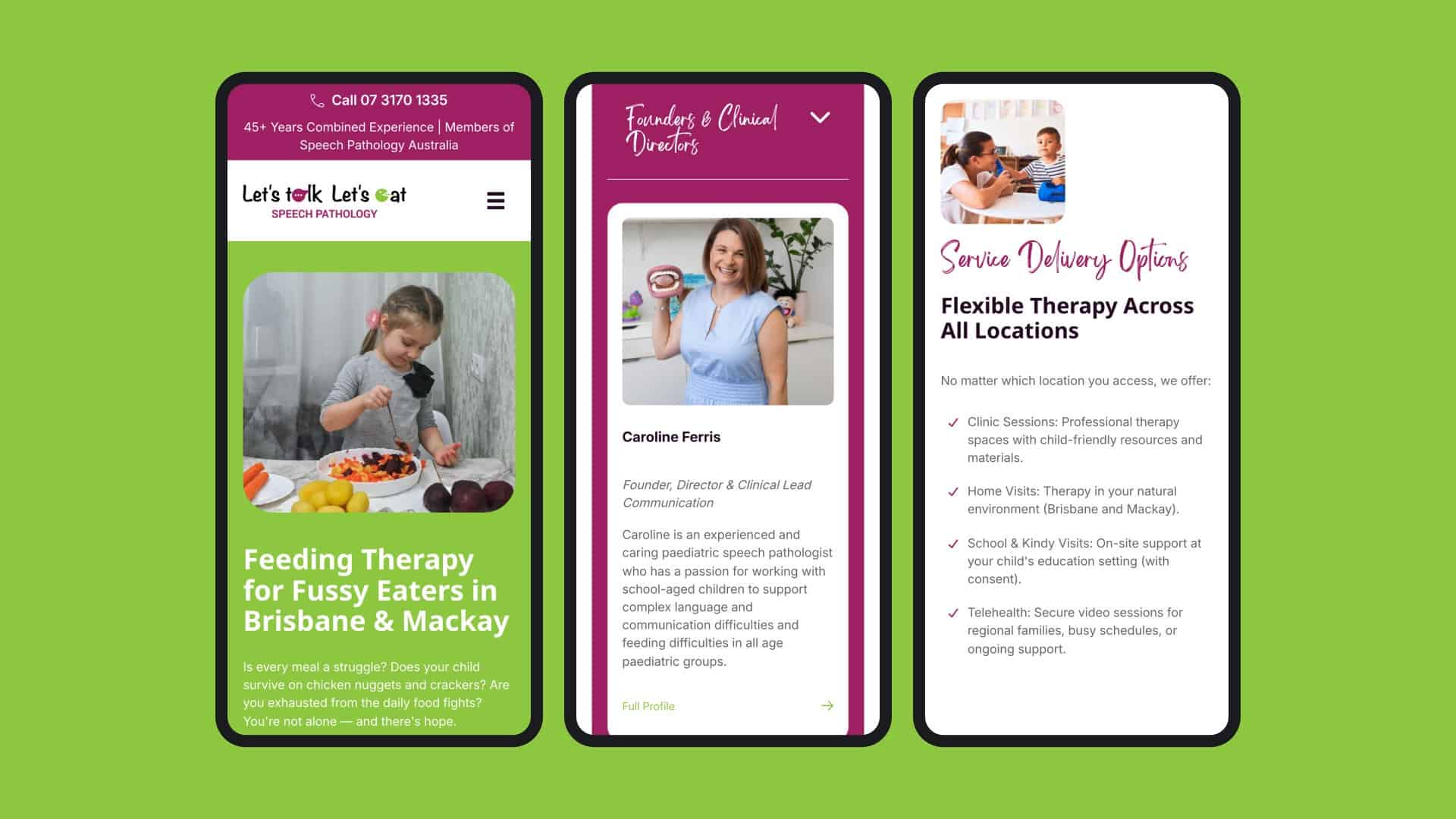
The build is WordPress with a staff profile system the team manages themselves, separate enquiry forms for parents and prospective staff, and Google Business Profile integration for each clinic. Click-to-call is the primary conversion path, since the practice's admin team converts well on the phone. The Join Our Team pathway gives a growing practice a recruitment channel it previously ran through word of mouth.
Content written the way parents search
Our SEO analysis found competitors ranked on clinical terms but left parent-language searches (late talker, child not talking yet, help for picky eater) largely uncontested. Page copy leads with the problems parents recognise rather than the clinical labels, backed by "what to expect" sections and FAQs. Every page passed the NDIS language check: "NDIS experienced provider" for self-managed and plan-managed participants, never "registered".
What we delivered
Let's Talk Let's Eat now has a site that presents its real differentiators (combined speech and feeding expertise, minimal waitlists, clinic, home, school and telehealth delivery) instead of hiding them. The search story did what the architecture promised. Impressions are still climbing month on month as the location and service pages gather rankings, and the structure extends as new clinics and programs come online. Parents who once found the practice through a social media inbox now find it through Google and call.
What we learned
Multi-location allied health practices bury their strongest ranking asset. Three clinics means three sets of local search intent, but only if each location gets a real page with its own team, directions and schema, not a line in a footer. The architecture mattered more than any page of copy.
The other lesson is language. Clinics write in clinical terms because that is how they think; parents search in plain ones. The gap between "paediatric feeding intervention" and "help for a picky eater" is where the uncontested search volume lived.
Impact & outcomes
Google Search clicks in July 2026, up from roughly 8 visits a month pre-rebuild
Google Search impressions in the site's first six months, climbing every month