
Temasek Life Sciences Laboratory
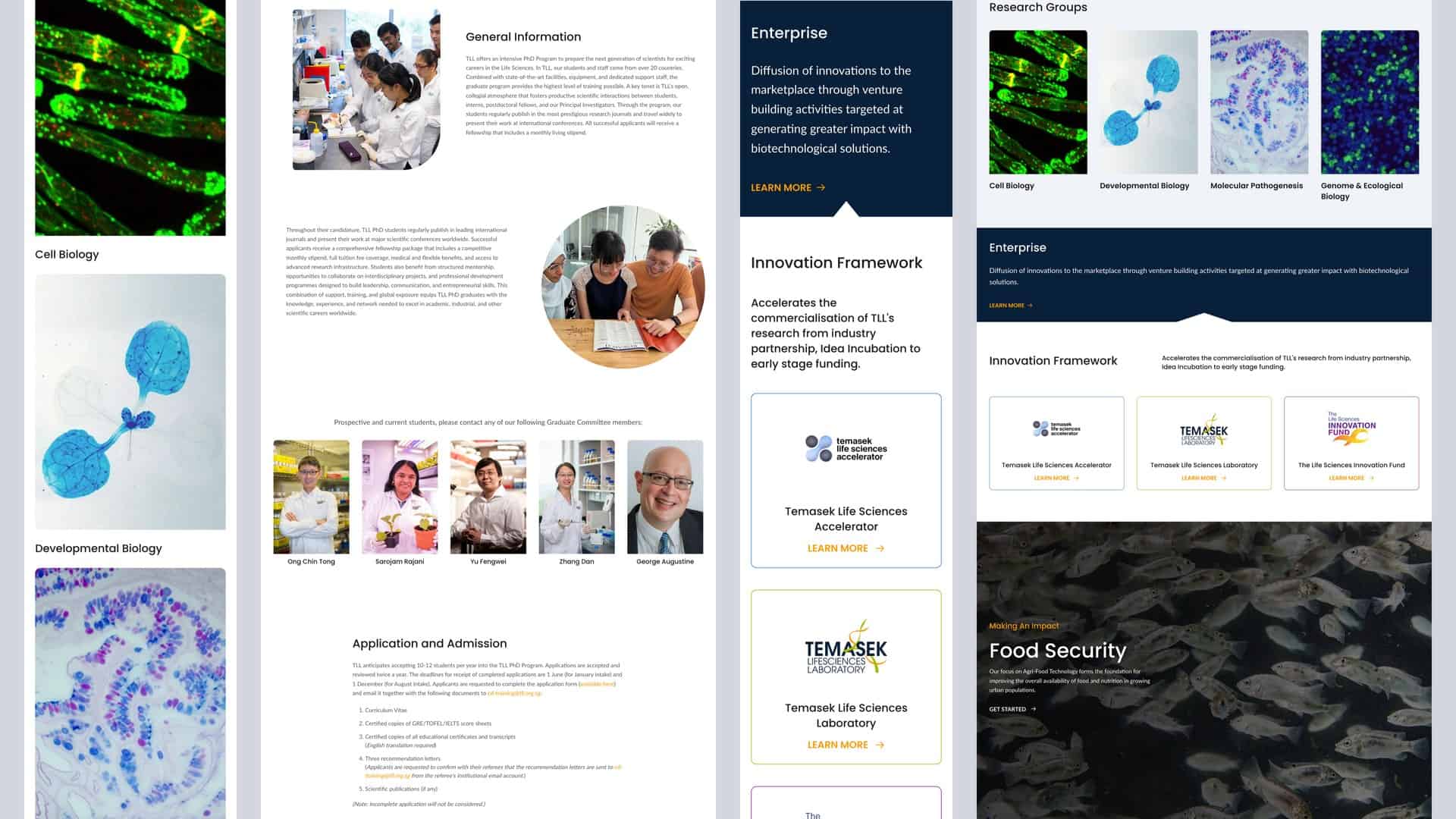
Temasek Life Sciences Laboratory runs four research groups and a PhD programme, but its old site hid the science behind a dated menu. We rebuilt it on WordPress with publications, events and vacancies synced from TLL's own systems.
TLL now has a WordPress site that presents its research groups, people and programmes clearly, with publications, events and careers refreshed from internal systems every 15 minutes.
What we were solving
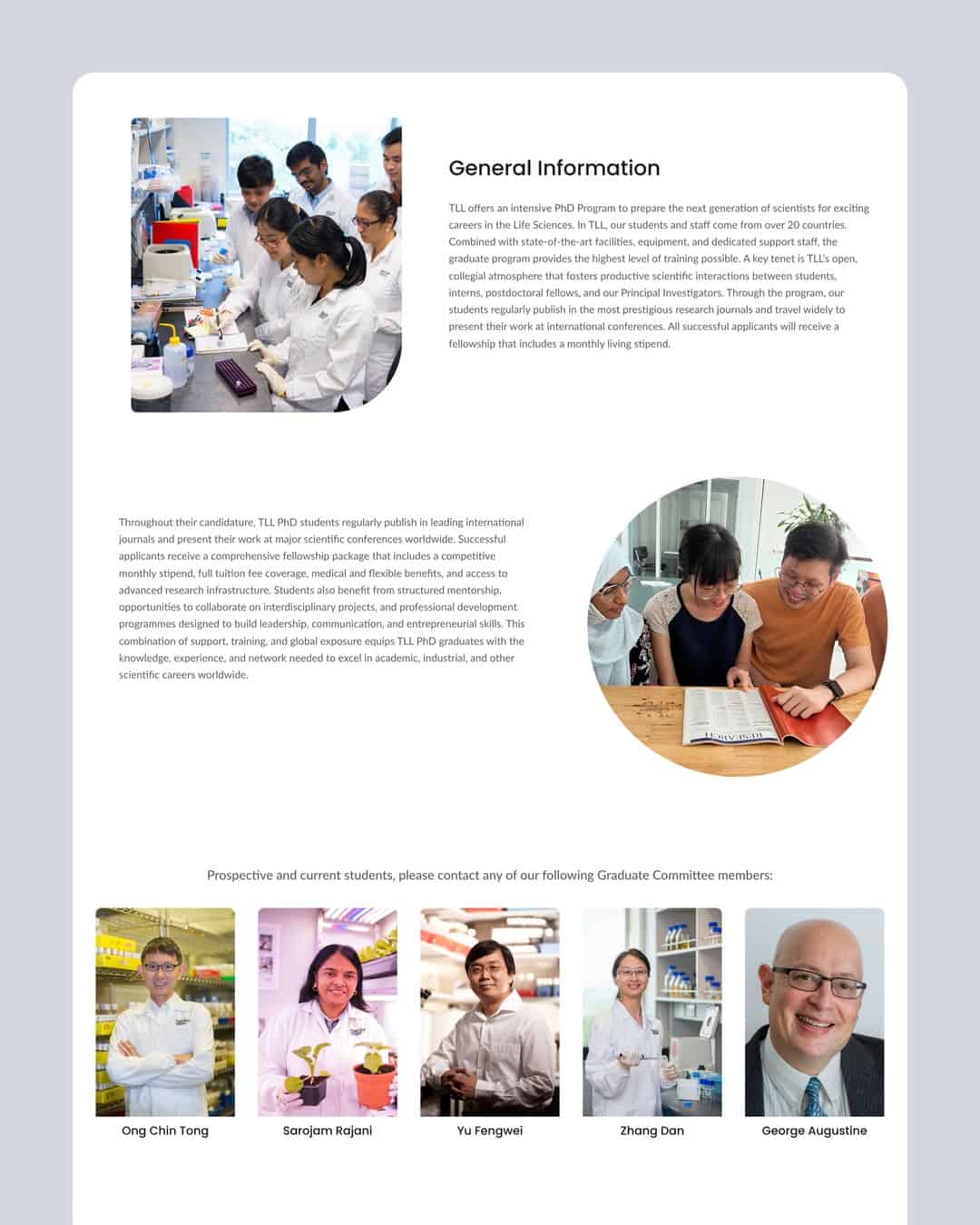
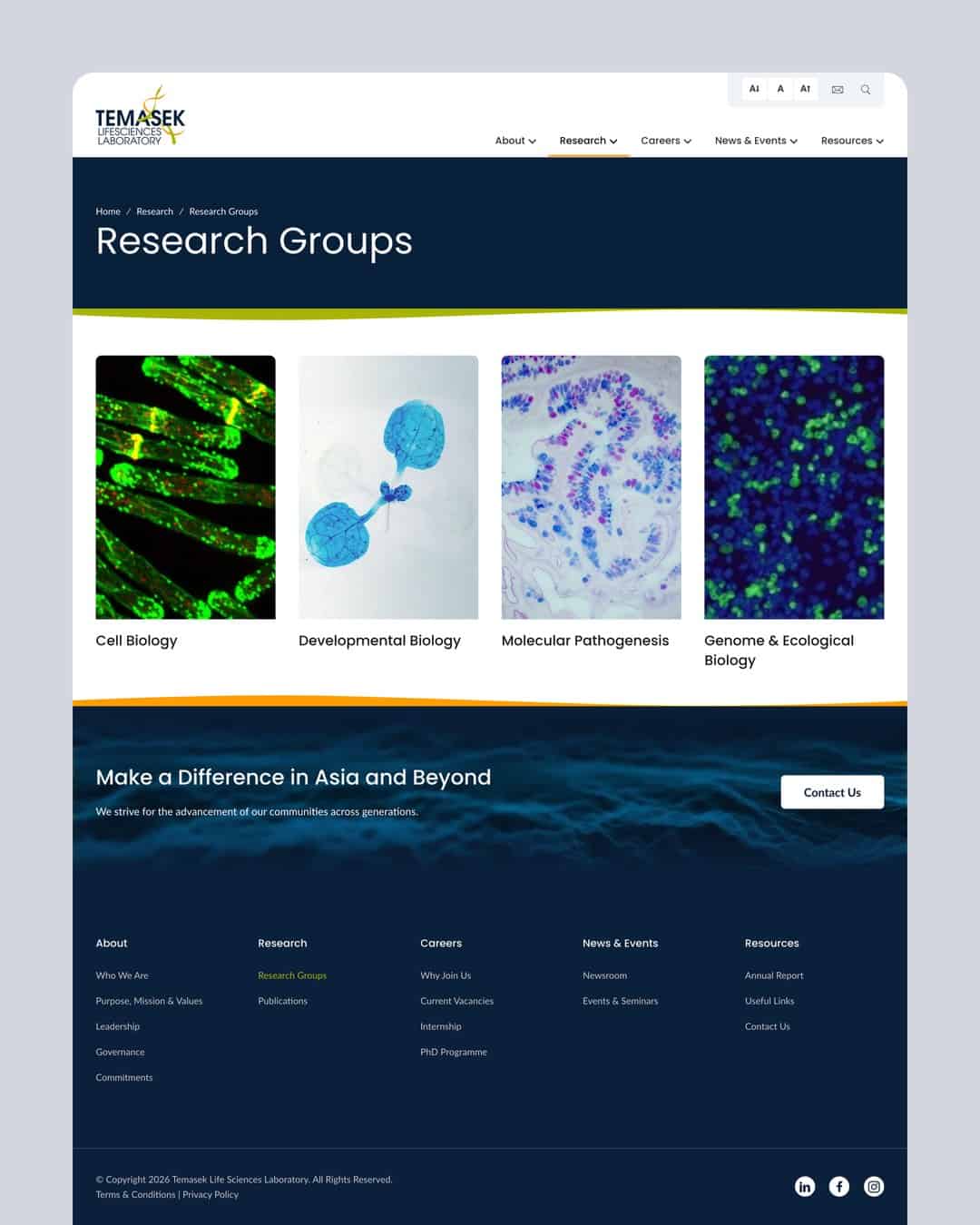
Temasek Life Sciences Laboratory is a Singapore research institute with around 170 scientists from 20 nationalities, working across cell biology, developmental biology, genome and ecological biology, and molecular pathogenesis. It runs a PhD programme with NUS and NTU, an accelerator, and an innovation fund.
The old website didn't show any of that well. Navigation was a long list of legacy sections, the microscopy facility sat on a separate microsite, and publications, seminars and vacancies were maintained by hand in two places: TLL's internal databases and the website.
TLL wanted a site that reads as a serious international research institute rather than a government department. It needed to attract senior scientists and PhD candidates, give philanthropists and partners a reason to make contact, and show twenty years of achievements. Above all, the listings had to come straight from TLL's systems so the web team never retyped a publication or a job post again.
How we tackled it
Structure first, with contact as the destination
We started with a design strategy session in July 2022 and rebuilt the information architecture around how visitors arrive. Home leads to who TLL is, then to the four research groups, then to impact areas (food security, sustainability, well-being), then to a clear contact point. A full-canvas mega menu replaced the legacy dropdowns so research groups, facilities, enterprise and careers are one click from any page. Custom post types hold people, research groups, events, careers and resources.
Design built to survive real content
The homepage design was approved in late 2022. Once real publications, events and people data flowed in, and a change of staff on TLL's side brought a new design direction, the layouts needed rethinking. We redesigned in April and May 2023, reworking the homepage, mega menu, event listings and accessibility controls until TLL endorsed the direction. We built the site as a custom WordPress child theme on Beaver Builder, with FacetWP powering filtered careers and people listings and Gravity Forms handling contact and annual report downloads.
Three feeds, synced every 15 minutes
TLL exposed APIs for publications, events and careers. We worked with their team through several revisions of the API spec, adding unique identifiers so our scripts could update and delete records rather than only add them. On the live server, scheduled jobs pull each feed, write a CSV, and run WP All Import every 15 minutes. After each import, TLL's web team gets an email listing what was created, updated, skipped or deleted. We also managed the migration from our staging environment onto TLL's own in-house server for launch.
What we delivered
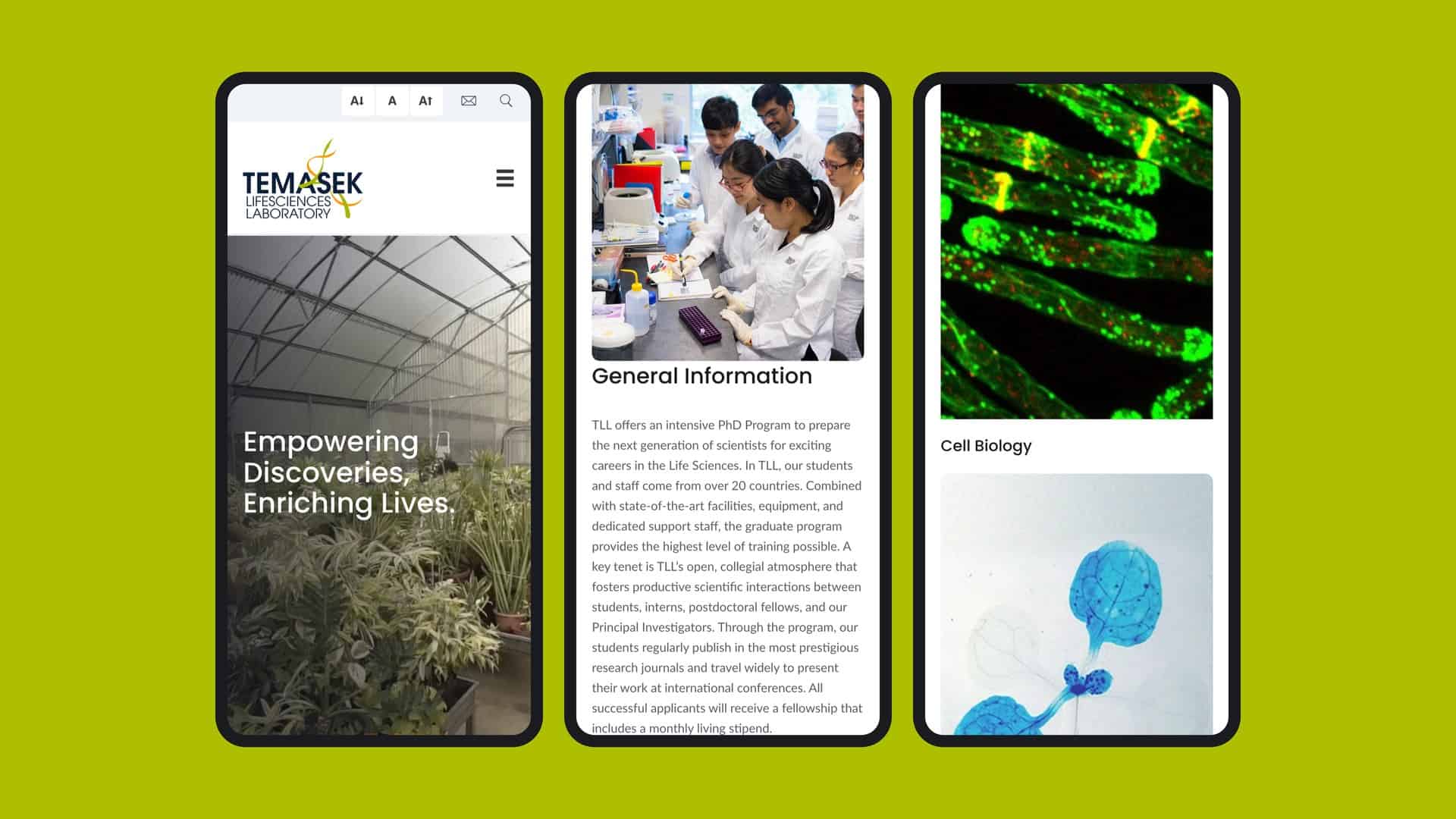
Temasek Life Sciences Laboratory now has a website that presents its science, people and programmes the way the institute sees itself. The site went live on 18 February 2025 on TLL's own infrastructure, with Google Analytics and Search Console connected the same day. Research groups, facilities and the PhD programme each have a proper home. Publications, seminars and vacancies appear on the site minutes after they're entered internally, with no second data entry. TLL stays with us on a care plan, and in 2026 we audited the site and handed TLL's server team a prioritised fix list.
What we learned
Design every dynamic template with real data before development starts. We approved layouts for publications and events on sample content, then redesigned them twice once the real feeds arrived. The second redesign cost more in code than it would have in Figma.
Agree the integration contract early. The API only gained stable record identifiers in its fifth revision, two years into the project. Update and delete logic can't be built without them, and every sync bug before that point traced back to it.
Impact & outcomes
data feeds (publications, events, careers) synced every 15 minutes
search impressions in one month
clicks from Google in one month